Executive Summary
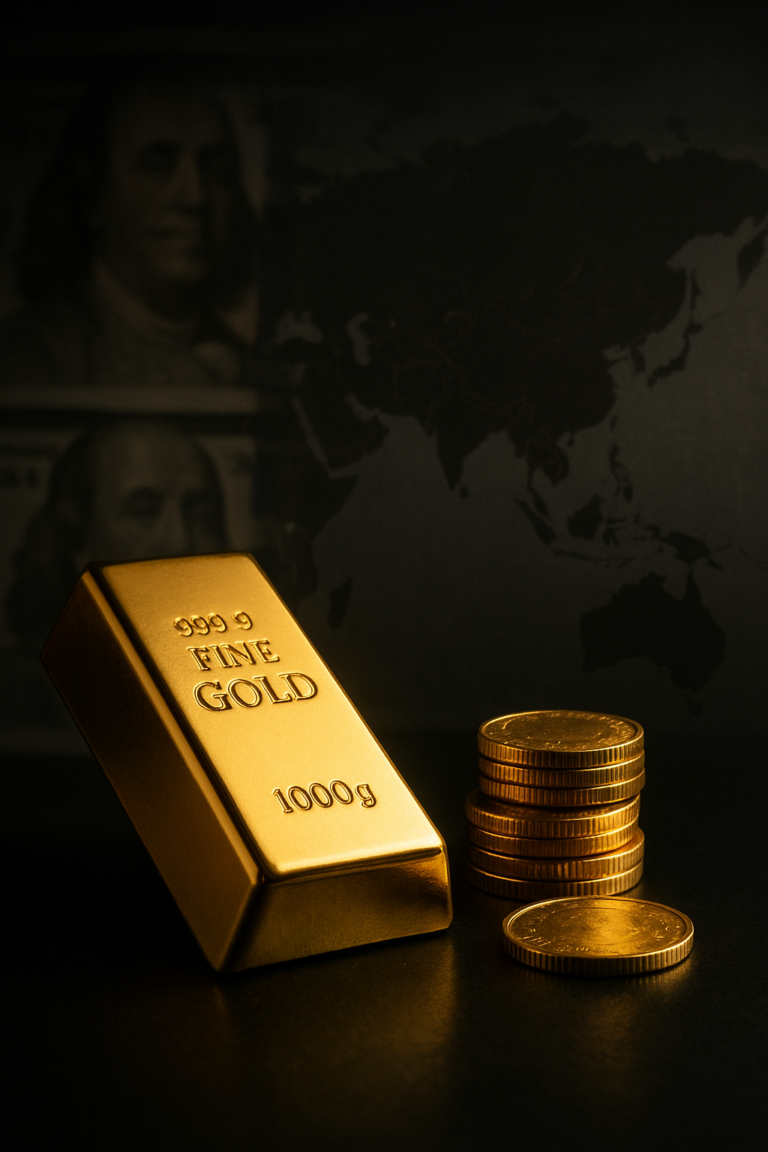
The key signal is that heightened US-Iran tensions are amplifying volatility and risk in global gold markets, which directly impacts investor behavior in Thailand’s capital markets. For Thailand, this development matters as it exacerbates uncertainty around safe-haven asset demand, foreign capital flows, and currency dynamics, all of which influence investment risk profiles and capital allocation decisions.
Gold market risks linked to geopolitical tensions signal increased investor caution and potential shifts in portfolio weighting toward perceived safe-haven assets. Thailand’s exposure to currency volatility driven by shifts in global capital flows, alongside the prominence of gold as a financial asset and commodity, mandates close investor attention to these risk factors.
This dynamic reinforces the criticality of understanding how external geopolitical shocks propagate into Thailand’s markets, affecting sectors such as finance, commodities trading, and export-driven industries sensitive to exchange-rate swings and capital cost variations.
Key Facts
- US-Iran geopolitical tensions have increased, raising uncertainty in global financial markets.
- Gold markets are experiencing heightened risk and volatility amid this geopolitical environment.
- Thailand’s financial markets and economy have indirect but significant exposure to gold price dynamics and currency fluctuations linked to safe-haven demand.
Why It Matters
Geopolitical tensions that increase risk in gold markets affect investor behavior by shifting capital toward assets deemed safe in uncertain times. Thailand’s market environment is vulnerable to these shifts due to its integration with global capital markets and sensitivity to foreign investment flows. Fluctuations in gold prices driven by geopolitical tensions directly affect the valuation of gold-related assets and liquidity conditions in Thailand’s financial markets.
Additionally, gold’s inverse relationship with US dollar strength impacts the Thai baht’s exchange rate dynamics. This interconnection can influence import costs, inflation pressures, and export competitiveness, particularly in sectors that rely heavily on dollar-denominated inputs or have significant foreign currency debt.
For Thai exporters and companies with dollar-linked liabilities, elevated gold market risks symbolize broader currency valuation uncertainties, complicating foreign exchange risk management and potentially increasing borrowing costs.
Investment Implications
Investors in Thailand need to consider the cascading effects of gold market volatility induced by US-Iran tensions on portfolio risk and asset allocation. Heightened gold market risk typically triggers shifts into precious metals and defensive assets globally, which may tighten liquidity or induce capital flight in emerging markets, including Thailand.
Financial institutions within Thailand may experience increased volatility in their asset portfolios and revenue streams linked to commodities and foreign exchange markets. This environment calls for enhanced risk mitigation strategies around currency exposure and commodity-linked asset classes.
Thai listed companies with operations or procurement sensitive to currency swings or commodity prices may face heightened input costs or revenue uncertainty. Entrepreneurs and businesses engaged in international trade or commodity markets will need to factor increased market risk premiums into project evaluations and capital costs.
Sector Impact
Positive
- Financial Services: Increased demand for hedging products and safe-haven asset management can expand opportunities in wealth management and derivatives trading.
Neutral
- Tourism: Limited direct impact as geopolitical tensions affect gold markets outside of travel behavior.
Risk
- Exporters: Exchange rate volatility linked to shifts in safe-haven flows may increase currency risk and impact profit margins.
- Energy & Commodities: Increased cost volatility and financing risk due to heightened uncertainty in commodity-linked capital markets.
- Banking: Elevated market volatility could lead to margin pressure and increase risk provisions due to currency and commodity price exposure.
Strategic Signals
This development signals Thailand’s heightened sensitivity to global geopolitical risk through the channel of gold market volatility, reinforcing Thailand’s positioning as an emerging market vulnerable to spillover effects from external safe-haven dynamics. It suggests that Thailand’s capital markets and currency will continue to be influenced by shifts in US dollar strength and global investor risk appetite linked to geopolitical uncertainty.
Moreover, it highlights the strategic importance of developing robust risk management frameworks within financial institutions and corporations to address commodity and currency market volatility driven by global political developments.
ASEAN Context
This development appears primarily domestic in nature with limited immediate ASEAN-wide implications.
Risks
Execution risks include the potential for sudden spikes in gold price volatility translating into sharp movements in the Thai baht and disruptions in liquidity in Thailand’s financial markets. The interconnectedness between gold as a safe-haven asset and currency flows means that heightened geopolitical tensions could unexpectedly stress Thailand’s external accounts or capital flows.
Financial sector participants exposed to currency mismatch or commodity-linked risks face increased credit and operational risk. Additionally, there is the risk that amplified uncertainty dampens foreign direct investment appetite, increasing Thailand’s cost of capital.
Bottom Line
US-Iran tensions elevating gold market risks underscore Thailand’s vulnerability to geopolitical risk through financial and currency market channels. The impact on Thailand’s exporters, financial institutions, and capital markets is notable, as heightened risk elevates currency volatility and cost uncertainties. Investors and market participants in Thailand must incorporate these dynamics into risk assessments to navigate capital allocation and operational exposures effectively amid sustained geopolitical volatility.
Thailand Investor Brief
Stay Ahead of Thailand and ASEAN Markets
Explore Thailand Signal Capital’s flagship investor intelligence service,
including free market insights and premium daily briefings for investors,
executives, entrepreneurs, and ASEAN-focused professionals.
- Thailand and ASEAN market intelligence
- Investment implications and strategic signals
- FREE and PRO briefing options
Frequently Asked Questions
Why does this development matter for Thailand investors?
This development matters because it may affect Thailand’s investment
environment through policy direction, sector exposure, trade dynamics,
capital allocation, or ASEAN market positioning.
Which sectors could be affected?
The most relevant sectors depend on the specific development, but investors
should assess exposure across policy-sensitive industries, financial
services, trade-linked sectors, infrastructure, property, tourism, energy,
and ASEAN-facing businesses.
How does this affect Thailand’s position in ASEAN?
The ASEAN impact depends on whether the development changes regional
competitiveness, cross-border investment, supply chains, or investor
sentiment. Thailand’s role should be assessed relative to nearby markets
such as Singapore, Malaysia, Vietnam, Indonesia, and Cambodia.
What should investors watch next?
Investors should watch implementation details, policy follow-through,
sector-level responses, corporate earnings signals, regulatory changes,
and whether the development creates measurable shifts in demand, costs,
or capital flows.
Complete Guide
For a broader investment framework, continue with the Thailand Tourism Investment Guide 2026.