Executive Summary
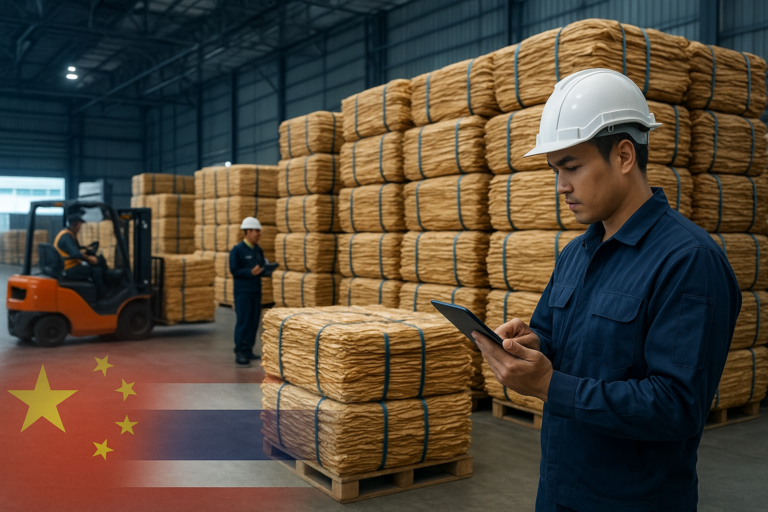
The key signal is the establishment or expansion of China TSR20 rubber futures warehouse capacity in Thailand, representing a strategic realignment of commodity storage and trading infrastructure in Southeast Asia. This development signals Thailand’s emerging role as a critical hub for regional rubber futures logistics, impacting commodity price discovery and supply chain efficiency. For investors, understanding this shift is crucial as it affects Thailand’s positioning in the global rubber supply chain and potentially influences trading flows, commodity-linked assets, and related industrial sectors.
By hosting TSR20 futures warehouses, Thailand is not only deepening its integration with China’s commodities futures market but also enhancing market infrastructure to support rubber trading liquidity. This is material for stakeholders in the rubber export, rubber-based manufacturing, and commodity trading sectors, as physical warehouse availability directly underpins futures contract volume and hedging activity. The keyword China TSR20 rubber futures warehouse Thailand summarizes the focal point of this development within Thailand’s strategic commodity trade landscape.
Key Facts
- China’s TSR20 rubber futures contracts are internationally recognized benchmarks for natural rubber pricing.
- New or expanded warehouse capacity for TSR20 rubber futures has been established in Thailand.
- Thailand is a globally significant natural rubber producer and exporter.
- The warehouses support physical delivery underpinning TSR20 futures contracts traded on Chinese exchanges.
Why It Matters
This development matters because it enhances Thailand’s structural role in the commodities futures market, especially rubber, by providing physical infrastructure to support futures trading volumes and price transparency. Physical warehouses directly affect the confidence and credibility of rubber futures as an effective hedging tool. Enhanced warehouse capacity in Thailand reduces logistics frictions for Southeast Asian producers and exporters engaging with China’s futures market.
Thailand traditionally supplies much of the raw material for TSR20 contracts but historically lacked sufficient in-market warehouse capacity to fully leverage futures market mechanisms for price risk management. This shift reduces dependency on foreign warehousing and enables more direct engagement with China-centric rubber price benchmarks, improving price discovery and reducing basis risk for exporters and processors operating in Thailand.
Investment Implications
The warehouse development strengthens Thailand’s market infrastructure, which can lead to increased participation in TSR20 rubber futures by Thai producers, traders, and industrial users. Such infrastructure gains could improve liquidity in futures markets with Thai underlying supply, lowering transaction costs and enhancing hedging effectiveness. Companies involved in rubber export and rubber-reliant manufacturing may realize more efficient cost structures and risk management capabilities.
From a capital allocation perspective, logistics providers, warehousing operators, and trading firms that leverage physical delivery points stand to benefit from expanded activity. The expanded warehousing may prompt larger volumes of futures contracts settled in Thailand, increasing fee income and operational scale for service providers aligned with commodity market intermediaries.
While the direct impact on Thai financial markets is limited to commodity-linked segments, it signals incremental strengthening of Thailand’s futures ecosystem and regional trade relevance. Investors with exposure to rubber commodities or companies linked to Thailand’s supply chain should evaluate evolving trade patterns and possible shifts in cost and risk profiles stemming from this development.
Sector Impact
Positive
- Commodities and Trading: Warehouse availability boosts futures market participation, price transparency, and hedging efficiency in Thailand.
- Rubber Manufacturing and Export: Improved price risk management and logistics reduce operational uncertainties and costs.
- Logistics and Warehousing: Increased demand for storage facilities directly linked to TSR20 futures delivery requirements.
Neutral
- Financial Markets: Indirect benefits via enhanced commodity market functioning but no immediate broad capital market effects.
- Other Manufacturing Sectors: Limited direct impact unless supply chain dependent on rubber inputs.
Risk
- Commodity Price Volatility: Increased futures trading could amplify short-term volatility, affecting export earnings and industrial input costs.
- Operational Risks: Warehouse management and regulatory compliance challenges could hinder effective utilization.
- Geopolitical and Trade Risks: Since the warehouses support China-linked futures, deterioration in China-Thailand trade relations could constrain operational benefits.
Strategic Signals
The establishment of China TSR20 futures warehouses signals Thailand’s deepening integration into Sino-centric commodity markets and reflects a strategic shift towards becoming a regional rubber trading hub. This infrastructure supports a more active rubber futures ecosystem, advancing Thailand beyond raw material supplier to a participant in downstream price discovery and risk management processes.
Such infrastructural enhancement indicates efforts to reduce supply chain inefficiencies in rubber trade between ASEAN and China. It also suggests a move towards regional commodity market harmonization supporting China’s prominence in global rubber pricing. This positions Thailand strategically to leverage enhanced connectivity in commodity markets for increased value capture along the rubber value chain.
ASEAN Context
This development appears primarily domestic in nature with limited immediate ASEAN-wide implications.
Risks
Execution risks include effective warehouse operation and regulatory compliance to maintain trustworthiness needed for futures contract delivery. Market risks stem from potential increased price volatility as futures markets mature with greater local delivery capability. Policy risks emerge from dependence on trade relations with China where shifts could disrupt operational synergies tied to China’s TSR20 contract framework.
Additionally, exposure to external shocks impacting global rubber demand or supply could affect warehouse utilization and related trading volumes, influencing returns on storage-related investments and ancillary service providers.
Bottom Line
The allocation of TSR20 rubber futures warehouses in Thailand marks a strategic enhancement of the country’s commodity infrastructure with tangible benefits for the rubber export and manufacturing sectors. It strengthens Thailand’s integration into China’s commodity markets and enhances price risk management capabilities locally. Despite limited direct ASEAN impact, the development advances Thailand’s positioning in the global rubber supply chain and commodities market structure. Investors and market participants aligned with rubber supply chains should incorporate the evolving infrastructure into assessments of operational and market risk dynamics.
Thailand Investor Brief
Stay Ahead of Thailand and ASEAN Markets
Explore Thailand Signal Capital’s flagship investor intelligence service,
including free market insights and premium daily briefings for investors,
executives, entrepreneurs, and ASEAN-focused professionals.
- Thailand and ASEAN market intelligence
- Investment implications and strategic signals
- FREE and PRO briefing options
Frequently Asked Questions
Why does this development matter for Thailand investors?
This development matters because it may affect Thailand’s investment
environment through policy direction, sector exposure, trade dynamics,
capital allocation, or ASEAN market positioning.
Which sectors could be affected?
The most relevant sectors depend on the specific development, but investors
should assess exposure across policy-sensitive industries, financial
services, trade-linked sectors, infrastructure, property, tourism, energy,
and ASEAN-facing businesses.
How does this affect Thailand’s position in ASEAN?
The ASEAN impact depends on whether the development changes regional
competitiveness, cross-border investment, supply chains, or investor
sentiment. Thailand’s role should be assessed relative to nearby markets
such as Singapore, Malaysia, Vietnam, Indonesia, and Cambodia.
What should investors watch next?
Investors should watch implementation details, policy follow-through,
sector-level responses, corporate earnings signals, regulatory changes,
and whether the development creates measurable shifts in demand, costs,
or capital flows.
Complete Guide
For a broader investment framework, continue with the Thailand Tourism Investment Guide 2026.