Executive Summary
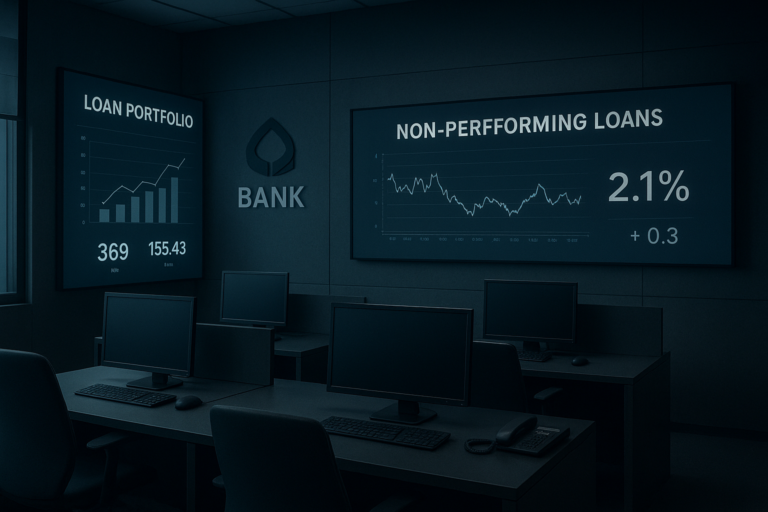
The key signal is a shift in the dynamics of Thai bank lending coupled with trends in bad loans, which collectively reflect evolving credit risks and banking sector health in Thailand. This development matters for investors because it directly influences financial institutions’ asset quality, risk premiums, and capacity to extend credit—critical factors shaping Thailand’s banking sector performance and economic linkages.
Changes in Thai bank lending and non-performing loan (NPL) levels are an early barometer of corporate and household financial stress or resilience. For investors, understanding these trends bears on the valuation of listed banks, risk assessments of credit exposures, and broader financial sector stability, which in turn impacts capital allocation decisions across Thailand’s economy.
Key Facts
- Thai bank lending trends exhibit fluctuations indicative of credit demand and supply forces.
- Bad loans, or non-performing loans (NPLs), have varied correspondingly, impacting asset quality metrics.
- Sector-specific loan performance differs, influencing risk concentrations.
- The extent and nature of bad loans highlight emerging stress points within the banking portfolio.
Why It Matters
This development signals shifts in credit risk profiles within Thailand’s financial system, directly influencing banks’ profitability and capital adequacy. For investors, the health of bank lending portfolios serves as a proxy for economic sectors’ financial soundness and debt-servicing capacity.
Elevated or sustained bad loans constrain banks’ capacity to lend, potentially dampening credit growth and economic expansion in segments reliant on external funding, such as SMEs and export-oriented companies. Conversely, improving loan quality can enhance banking sector resilience, support lending, and reduce risk premiums.
Investment Implications
Trends in Thai bank lending and bad loans affect investor perception of credit risk and the valuation of banking equities and debt instruments. Worsening NPL ratios elevate risk premiums, compress margins, and raise provisions, pressuring bank earnings forecasts.
For capital allocation, sectors demonstrating stable or improving loan conditions might attract greater investment given their lower credit risk exposure. In contrast, sectors showing increased loan stress may face tighter financing conditions and higher borrowing costs, influencing their growth trajectories and investment appeal.
Additionally, the interplay of lending trends and NPLs informs risk management strategies for portfolios with bank-related exposures or financial-sector holdings in Thailand.
Sector Impact
Positive
- Banking: Improved loan quality or stable bad loan ratios enhance capital efficiency and profitability prospects.
- Corporate Borrowers: Sectors benefiting from sustained lending have better access to capital for operations and expansion.
Neutral
- Household Credit: Absent detailed source data, impact on consumer lending remains ambiguous.
Risk
- Non-Banking Sectors with Elevated Exposure: Industries exhibiting rising bad loans face potential financing constraints and higher borrowing costs.
- Financial Sector: Elevated bad loans increase credit risk, reduce profitability, and may pressure capital buffers.
Strategic Signals
This development signals a more granular credit assessment environment within Thailand’s banking system, emphasizing credit risk differentiation and portfolio management in response to economic conditions. It highlights the banking sector’s pivotal role in either amplifying or mitigating economic cycles through credit supply adjustments.
Additionally, the trends suggest evolving risk appetites and credit allocation methodologies that could influence capital flows both domestically and from foreign investors seeking exposure to Thailand’s financial sector.
ASEAN Context
This development appears primarily domestic in nature with limited immediate ASEAN-wide implications.
Risks
Risks include potential worsening in bad loans that impair bank earnings and capital, increasing financial sector vulnerability. Credit tightening could slow economic activity, especially in credit-sensitive sectors with greater exposure to bank lending. Furthermore, any mismatch between banks’ risk assessment and actual borrower stress may lead to delayed recognition of asset quality deterioration.
Bottom Line
The evolving landscape of Thai bank lending and bad loans offers a vital signal on credit risk and banking sector health with direct implications for investors’ risk assessment and capital allocation in Thailand. Understanding these trends is essential for evaluating financial-sector stability and the economic sectors reliant on bank financing. This dynamic shapes Thailand’s investment climate by influencing credit availability, cost, and financial-sector profitability.
Thailand Investor Brief
Stay Ahead of Thailand and ASEAN Markets
Explore Thailand Signal Capital’s flagship investor intelligence service,
including free market insights and premium daily briefings for investors,
executives, entrepreneurs, and ASEAN-focused professionals.
- Thailand and ASEAN market intelligence
- Investment implications and strategic signals
- FREE and PRO briefing options
Frequently Asked Questions
Why does this development matter for Thailand investors?
This development matters because it may affect Thailand’s investment
environment through policy direction, sector exposure, trade dynamics,
capital allocation, or ASEAN market positioning.
Which sectors could be affected?
The most relevant sectors depend on the specific development, but investors
should assess exposure across policy-sensitive industries, financial
services, trade-linked sectors, infrastructure, property, tourism, energy,
and ASEAN-facing businesses.
How does this affect Thailand’s position in ASEAN?
The ASEAN impact depends on whether the development changes regional
competitiveness, cross-border investment, supply chains, or investor
sentiment. Thailand’s role should be assessed relative to nearby markets
such as Singapore, Malaysia, Vietnam, Indonesia, and Cambodia.
What should investors watch next?
Investors should watch implementation details, policy follow-through,
sector-level responses, corporate earnings signals, regulatory changes,
and whether the development creates measurable shifts in demand, costs,
or capital flows.
Complete Guide
For a broader investment framework, continue with the Thailand Tourism Investment Guide 2026.