Executive Summary
The key signal is Thailand’s deepening integration into the financial networks supporting Mekong trade, reflecting a strategic macroeconomic transformation underpinning its ambitions to become Southeast Asia’s logistics, manufacturing, and clean energy hub. This development matters because it reveals a growing structural shift in capital flows, trade finance, and cross-border investments that strengthen Thailand’s economic centrality within the Mekong subregion. Such financial network evolution directly influences Thailand’s currency stability, trade competitiveness, and export-oriented sectors by solidifying its role as a pivotal node in regional supply chains and financial services.
Key Facts
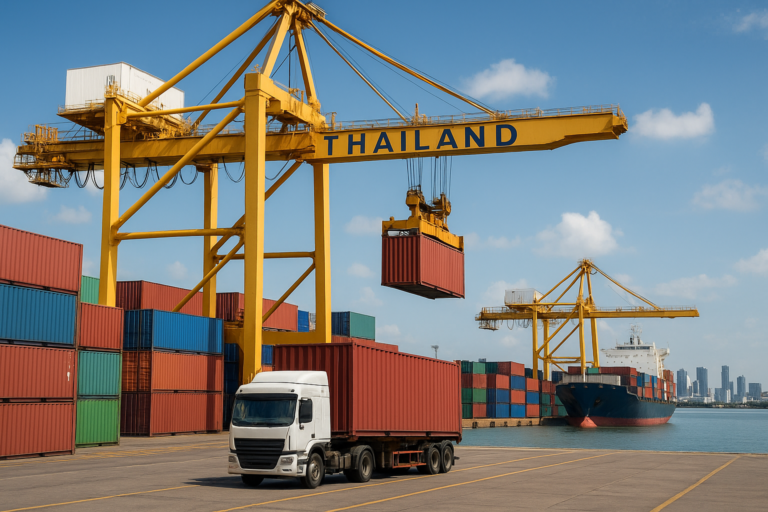
- Thailand is accelerating efforts to become a regional logistics, manufacturing, and clean energy hub.
- Underlying this ambition is a quieter transformation in Southeast Asia’s financial system linked to Mekong trade.
Why It Matters
The evolving financial networks supporting Mekong trade signal Thailand’s expanding influence on regional capital flows and trade finance mechanisms. As Thailand consolidates its role in the Mekong economic corridor, it gains leverage over integrated supply chains, which directly impacts export-driven growth trajectories. Enhanced financial connectivity facilitates smoother cross-border payments, lowers transaction costs, and expands credit availability for trade partners, which in turn supports competitive pricing for Thai exporters and importers.
For the Thai baht, embedding within these transnational financial networks could improve currency liquidity and reduce volatility through diversified capital inflows connected to trade expansion. Reduced friction in trade financing also mitigates risk premia on corporate borrowing, benefiting listed companies exposed to Mekong markets—particularly in logistics, export manufacturing, and clean energy sectors.
This financial shift aligns with Thailand’s broader macro goals of attracting sustained foreign direct investment, diversifying trade partners, and advancing economic corridors that link ASEAN with the Greater Mekong Subregion (GMS). The transformation reflects an implicit upgrading of Thailand’s role from a regional participant to a financial intermediary, which may amplify its fiscal revenues through increased trade volume and related service fees.
Sector Impact
Positive:
- Logistics – Improved finance and payment networks reduce operational bottlenecks and support Thailand’s aspirations as a regional hub.
- Manufacturing – Enhanced capital channels and trade finance accessibility strengthen supply chain resilience and export capacity.
- Clean Energy – Better access to financing linked to regional networks facilitates investment in renewable infrastructure aligned with Thailand’s energy transition.
Neutral:
- Banking & Fintech – While financial networks evolve, the impact depends on domestic regulatory adaptation; current information does not clarify changes in banking system risk or credit conditions.
Risk:
- Exporters highly exposed to Mekong neighbors – Potential overreliance on regional trade networks could increase vulnerability to localized geopolitical or economic shocks within the Mekong subregion.
ASEAN Context
This development underscores Thailand’s strategic leveraging of Mekong financial integration as a subregional complement to ASEAN’s broader economic architecture. Enhanced financial networks across the Greater Mekong Subregion serve as a microcosm of ASEAN’s integration ambitions but focus on a subset of countries, amplifying Thailand’s relative influence vis-à-vis neighbors such as Laos, Cambodia, Myanmar, and Vietnam. This reinforces Thailand’s positioning as a critical gateway facilitating ASEAN’s east-west connectivity and serving as a bridge to China’s Belt and Road initiatives, which further integrate Mekong economies.
Bottom Line
Thailand’s embedding within the Mekong financial networks signals a deeper macroeconomic realignment supporting its regional hub ambitions. This creates structural benefits for trade finance, currency stability, and export-led sectors. Investors should interpret this as Thailand strengthening cross-border financial linkages that underpin economic corridors, bolstering its competitiveness and investment appeal within the ASEAN framework. The shift also requires awareness of emerging regional dependencies and sector-specific risks tied to Mekong economic health.
Thailand Investor Brief
Want deeper Thailand & ASEAN investor intelligence?
Join Thailand Investor Brief FREE
Unlock Thailand Investor Brief PRO
Complete Guide
For a broader investment framework, continue with the Thailand Macro Investment Guide 2026.