Executive Summary
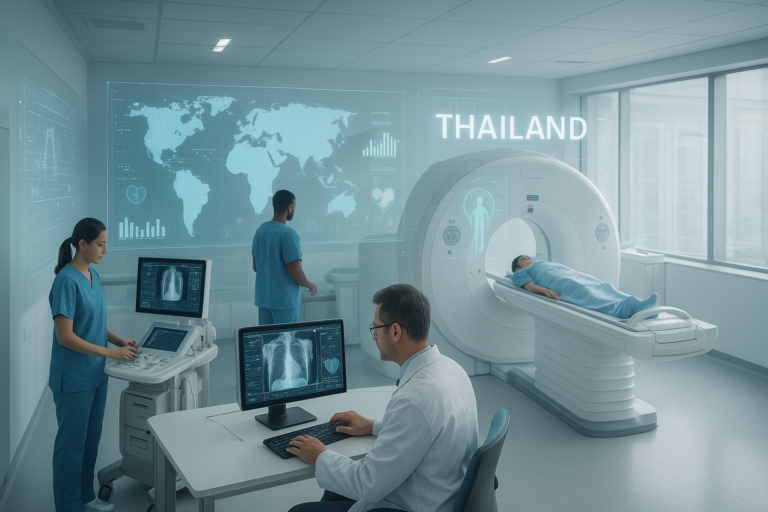
The key signal is Thailand’s healthcare sector, exemplified by Siriraj hospital, intensifying its technological transformation to establish itself as a leading global medical and wellness hub. This matters because it highlights significant shifts towards high-value specialized care that can diversify Thailand’s economic base, attract higher-spending international patients, and stimulate innovation-driven business growth. Investors should note the sector’s evolving competitive landscape, which is poised to generate new opportunities in healthcare services, medical technology, and wellness tourism, thereby influencing capital allocation and long-term sector valuation.
Key Facts
- Thailand’s healthcare sector is accelerating its development as a premier global medical and wellness hub.
- Siriraj hospital is leveraging advanced technology and specialised treatment centres to elevate care quality for both Thai and international patients.
- The emphasis is on integrating cutting-edge medical technology with specialised services to enhance treatment outcomes and global competitiveness.
Why It Matters
This development signals a strategic pivot in Thailand’s healthcare sector toward high-value, technology-enabled care, shifting away from volume-driven services to specialized, outcome-focused treatments. For Thailand’s economy, this transition could translate into increased healthcare exports via medical tourism, a segment known to generate higher foreign exchange inflows compared to general tourism due to the premium nature of advanced medical treatments.
With healthcare technology at the core, supplier chains related to medical devices, diagnostics, and digital health platforms stand to attract incremental investment and innovation. This could foster an ecosystem conducive to research and development, emphasizing precision medicine and AI-assisted diagnostics, areas that elevate Thailand’s appeal beyond traditional cost-competitiveness.
Moreover, enhanced healthcare capabilities improve domestic labor productivity by promoting better population health, indirectly bolstering economic resilience. Advanced care can also reduce long-term healthcare costs through preventive and efficient treatment modalities, which is significant for Thailand’s aging demographic.
For investors, sector specialization signifies opportunities in listed hospital operators, medical device suppliers, and biotech firms seeking growth in Thailand’s expanding market. It could also attract foreign direct investment targeting regional healthcare hubs, with Siriraj serving as a technology and treatment benchmark.
Sector Impact
Positive:
- Healthcare: Enhanced technology integration combined with specialized centres improves service quality, attracting affluent patients domestically and internationally, driving revenue growth.
- Medical Technology & Equipment: Rising demand for advanced diagnostic and treatment tools fuels capital investment and innovation in the sector.
- Wellness and Medical Tourism: Premium medical services support a higher yield tourism segment, increasing foreign currency intake and associated hospitality benefits.
Neutral:
- Pharmaceuticals: While related, pharma is less directly impacted unless integrated closely with technology-driven treatment protocols.
Risk:
- General Hospitals: Facilities lacking technological upgrades may face competitive pressure or margin erosion as patients gravitate toward specialized, tech-enabled centres.
- Public Healthcare Funding: Increased investment in advanced technology may widen the gap between private and public healthcare accessibility if government budgets do not align accordingly.
ASEAN Context
This transformation positions Thailand as a compelling medical hub within ASEAN, reinforcing its competitive edge against neighbouring countries vying for regional healthcare leadership. Enhanced technological capacity at institutions like Siriraj enables Thailand to capture greater shares of cross-border medical tourism and specialized care demand from ASEAN countries with underdeveloped healthcare infrastructures.
Furthermore, it may stimulate regional collaboration on health technology innovation and training, thereby increasing ASEAN’s overall healthcare standards. However, this also raises competitive benchmarks for neighboring markets, which could accelerate regional healthcare modernization efforts.
Bottom Line
Siriraj’s push to integrate advanced technology in specialized care signals a maturing Thai healthcare sector pivoting towards high-value medical services. This shift enhances Thailand’s attractiveness to global patients and investors, underpinning growth prospects for healthcare providers and related technology firms. The move aligns with broader economic diversification goals, positioning healthcare as a strategic export sector. For investors, this trend emphasizes the importance of technology-enabled healthcare assets in Thailand’s evolving market landscape.
Thailand Investor Brief
Want deeper Thailand & ASEAN investor intelligence?
Join Thailand Investor Brief FREE
Unlock Thailand Investor Brief PRO
Complete Guide
For a broader investment framework, continue with the Thailand Energy Investment Guide 2026.