Executive Summary
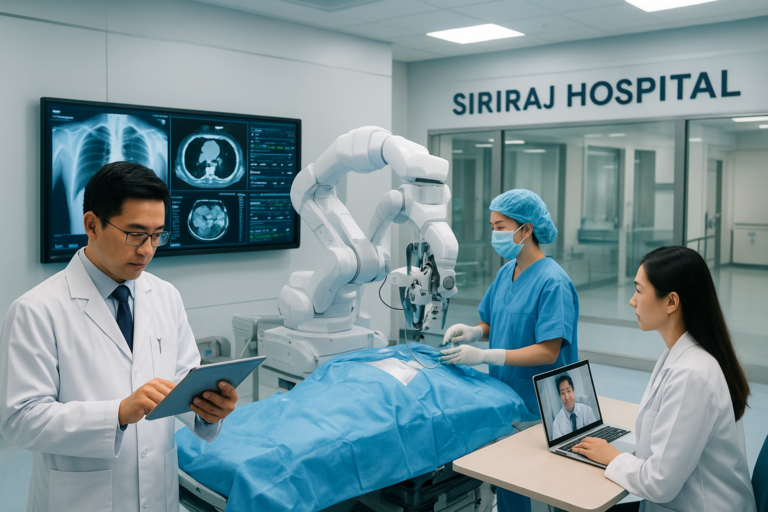
The key signal is Thailand’s strategic prioritisation of integrating advanced technology within leading medical institutions like Siriraj Hospital, signalling a deliberate move to elevate the country’s healthcare sector to global prominence beyond traditional medical tourism. For investors, this signals expanding demand for high-value healthcare services driven by technology-enabled specialised treatment centres, creating opportunities in healthcare services, medical technology, and associated ecosystems.
Key Facts
- Siriraj Hospital, Thailand’s leading medical institution, is accelerating the adoption of advanced technology to push for specialised, high-tech medical care.
- The broader Thai healthcare sector is targeting a transformation into a premier global medical and wellness hub.
- This initiative aims to serve both Thai residents and international patients seeking advanced, specialised treatments.
Why It Matters
This development marks a shift from Thailand’s historically price-competitive medical tourism model toward value-driven, technology-intensive healthcare provision. By emphasizing advanced technology and specialised care, Thailand addresses growing demand for complex procedures and premium health services, helping to mitigate patient outflow to more developed regional hubs such as Singapore and South Korea.
Economically, this shift supports higher healthcare sector GDP contributions through increased service complexity and higher margins, which may attract more foreign investment into healthcare infrastructure and technology providers. Enhanced medical capabilities could also reduce outbound medical travel expenditure, improving Thailand’s healthcare current account balance.
From a business standpoint, this technology push incentivizes collaborations and investments in health tech startups, medical devices, diagnostics, and digital health platforms. It also portends rising capital intensity and human capital requirements within healthcare providers, favoring firms with strong technology integration capabilities and innovation pipelines.
At the macro level, the move aligns with Thailand’s goal to diversify its economy by strengthening knowledge-intensive sectors with export potential. It complements growth in wellness tourism, extending economic spillovers across hospitality, transport, and services. However, this requires stable infrastructure investment and skilled labor development to sustain quality and competitiveness.
Sector Impact
Positive:
- Healthcare sector – Enhanced technology adoption improves service sophistication and international competitiveness, potentially increasing revenue and margins.
- Medical technology and biotech – Increased demand for high-tech equipment and innovative healthcare solutions fuels growth opportunities.
- Wellness and medical tourism – Integrating advanced care options elevates Thailand’s profile beyond low-cost medical tourism to a premium destination.
Neutral:
- Pharmaceutical sector – While supportive of specialised therapies, the immediate impact may be limited unless linked with technology-driven treatment innovations.
- General hospitals outside major centers – May face increased competitive pressure but can benefit from sector-wide innovation spillovers.
Risk:
- Public healthcare budget – High investment requirements for advanced technologies could strain public funds or crowd out other health priorities if not managed efficiently.
- Labor market – Shortages of specialised medical professionals and technicians could constrain growth and increase costs.
ASEAN Context
This development reinforces Thailand’s ambition to remain competitive regionally amidst rising healthcare standards in ASEAN peer countries. By advancing its technological and specialised care capabilities, Thailand enhances its position as a medical hub within ASEAN, counterbalancing increasing competition from Singapore, Malaysia, and Vietnam.
The focus on technology-driven advanced care can facilitate cross-border patient flows within ASEAN, potentially increasing regional healthcare integration and standardization. However, it also raises the bar on regional healthcare quality expectations and infrastructure, encouraging other ASEAN countries to upgrade their capabilities, intensifying competition.
Bottom Line
Thailand’s strategic push to integrate advanced medical technologies at premier institutions like Siriraj signals a sector evolution toward high-value healthcare services. This lays the groundwork for stronger economic contributions from healthcare and associated industries, shifting Thailand’s competitive positioning in ASEAN. Investors with exposure to healthcare providers, medical technology, and wellness tourism stand to benefit from the enhanced service offerings and international patient inflows. Monitoring execution on infrastructure and skilled workforce development will be critical to realizing this potential.
Thailand Investor Brief
Want deeper Thailand & ASEAN investor intelligence?
Join Thailand Investor Brief FREE
Unlock Thailand Investor Brief PRO
Complete Guide
For a broader investment framework, continue with the Thailand Energy Investment Guide 2026.