Executive Summary
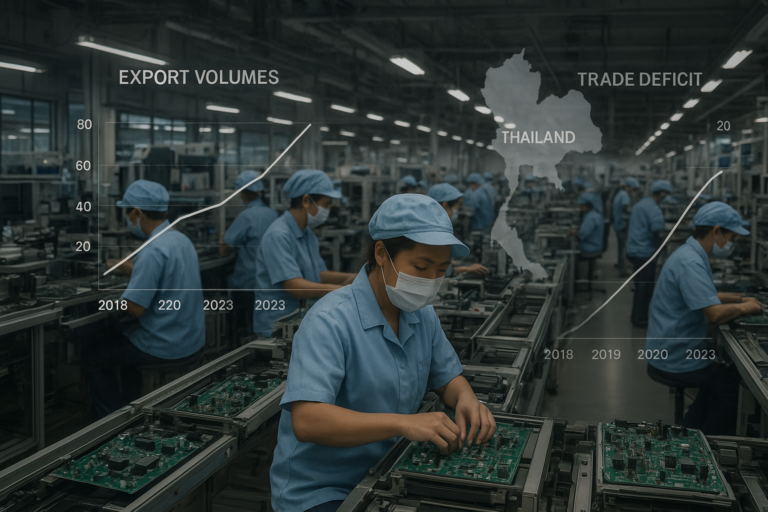
The key signal is Thailand’s growing electronics exports alongside an expanding trade deficit, underscoring structural shifts in the country’s external trade dynamics. For investors, this development signals a complex interplay between robust sectoral export performance and rising import-driven pressures that could weigh on currency stability, corporate profitability, and the broader external balance.
Key Facts
- Thailand’s electronics exports have surged, driven by increased production and demand.
- The country’s trade deficit has widened, propelled in part by growing imports linked to electronics components and other intermediary goods.
- These trends reflect ongoing shifts within Thailand’s manufacturing supply chains, particularly in technology and electronics sectors.
Why It Matters
Escalating electronics exports demonstrate Thailand’s strengthening role in global technology supply chains, which is positive for manufacturing sector revenues and export diversification. However, the simultaneous increase in trade deficits exposes vulnerabilities rooted in heavy import reliance for high-value components. This dynamic signals pressure on Thailand’s external accounts, which could constrain policy flexibility and affect currency valuation amid fluctuating global trade conditions.
For investors, companies in Thailand’s export-oriented technology sectors may experience revenue growth but face margin compression if imported input costs rise due to currency depreciation or supply bottlenecks. Furthermore, sustained trade deficits can contribute to baht volatility, influencing corporate borrowing costs and foreign portfolio investment flows.
From a macroeconomic standpoint, higher import reliance linked to export production increases Thailand’s sensitivity to global supply chain disruptions and raw material price shocks. The imbalance also affects Thailand’s external debt profile and reserve adequacy, which are critical pillars for investor confidence.
Sector Impact
Positive:
- Electronics manufacturing – Accelerated export growth underlines Thailand’s competitive positioning and potential for upstream value addition.
- Capital goods and industrial parts suppliers – Increased demand from export-oriented manufacturers may boost domestic supply chains and investment in related sectors.
Neutral:
- Financial sector – Impact on currency and trade balances will influence banking sector exposure to corporate loans in manufacturing but is currently neutral given no immediate credit stress signals.
Risk:
- Import-dependent manufacturing – Exposure to volatility in imported inputs costs could compress margins and earnings.
- External balance-sensitive sectors – Prolonged trade deficits may pressure the baht, affecting companies with significant foreign currency liabilities.
ASEAN Context
Thailand’s position as a regional electronics hub is reinforced by the export surge, enhancing its role within ASEAN’s integrated supply chains. The trade deficit growth stemming from component imports reflects broader ASEAN manufacturing interdependence, as firms source inputs from neighboring countries. While this boosts intraregional trade, it also exposes Thailand to regional supply chain disruptions. This development emphasizes the strategic importance of enhancing intra-ASEAN connectivity and mitigating single-country supply risks.
Bottom Line
Thailand’s simultaneous rise in electronics exports and trade deficits signals a nuanced trade-off between export growth and external balance sustainability. Investors should prioritize companies with strong value-add capabilities and supply chain resilience to navigate cost pressures. Currency volatility risks linked to trade deficits necessitate careful assessment of foreign currency exposures. Overall, Thailand’s exportsector dynamism is tempered by structural import dependencies impacting macroeconomic and corporate fundamentals.
Thailand Investor Brief
Want deeper Thailand & ASEAN investor intelligence?
Join Thailand Investor Brief FREE
Unlock Thailand Investor Brief PRO
Complete Guide
For a broader investment framework, continue with the Thailand Banking & Fintech Guide 2026.