Executive Summary
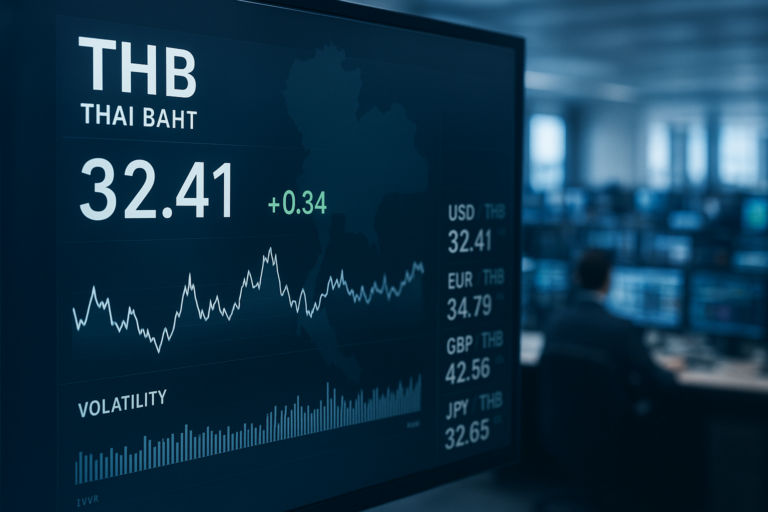
The key signal is the intensifying pressure on the Thai Baht stemming from a growing trade deficit, highlighting vulnerabilities in Thailand’s external balance. For investors, this development signals increased currency volatility and potential shifts in capital flows that could impact returns on Thai assets, especially in FX-sensitive sectors. Understanding this pressure is crucial given Thailand’s heavy reliance on imports for energy and raw materials, which amplifies the trade deficit’s impact on currency valuation and borrowing costs for Thai businesses.
Key Facts
- Thailand is experiencing a widening trade deficit, with imports outpacing exports significantly.
- The trade deficit is applying downward pressure on the Thai Baht, increasing FX market volatility.
- Energy imports remain a major component of Thailand’s import bill, contributing substantially to the deficit.
Why It Matters
A widening trade deficit exerts direct pressure on the Thai Baht by increasing the demand for foreign currency to finance imports, thus straining the external balance. For Thailand, whose economy is import-dependent for energy and industrial inputs, a sustained deficit can accelerate capital outflows or reduce inflows, destabilizing the currency in FX markets.
For investors, this manifests as heightened currency risk, affecting returns on equity and fixed income instruments when converted back to investors’ base currencies. Exporters may face challenges as a weaker Baht could initially be beneficial for competitiveness but is often accompanied by inflationary pressures due to costlier imported inputs, squeezing profit margins. Conversely, importers confront direct cost increases, deteriorating earnings potential in sectors reliant on imported goods and services.
From a macroeconomic standpoint, exchange rate pressure complicates monetary and fiscal management. Policy uncertainty may increase if the government or central bank is compelled to intervene in FX markets or reassess macroeconomic assumptions, thereby affecting market pricing of Thai assets.
Sector Impact
Positive:
- Exporters – A depreciating Baht can enhance price competitiveness internationally, benefiting manufacturing and agriculture exporters by improving export revenues in local currency terms.
Neutral:
- Financials – While currency volatility may increase trading revenues for some, overall loan performance could remain stable unless inflation and borrowing costs surge.
Risk:
- Energy and Industrials – Heavily reliant on imported energy and raw materials, these sectors face margin pressure as input costs rise with a weaker Baht.
- Retail and Consumer Discretionary – Costlier imports can erode profit margins and reduce consumer purchasing power in the medium term.
ASEAN Context
This development appears primarily domestic in nature with limited immediate ASEAN-wide implications. However, Thailand’s currency volatility, if prolonged, might influence regional capital allocation among ASEAN investors who weigh currency risk differentials. Such dynamics could indirectly alter cross-border investment flows within ASEAN but are not expected to trigger immediate regional FX or trade disruptions.
Bottom Line
The widening trade deficit and resulting Baht pressure provide a clear signal of underlying external vulnerabilities in Thailand’s economy. Currency volatility will shape investor returns and sector profitability, especially for import-reliant businesses facing elevated costs. Strategic investors must factor in FX risk dynamics alongside Thailand’s trade balance when assessing exposure. Monitoring this pressure is essential to anticipate shifts in capital flows and adjust portfolio allocations accordingly.
Thailand Investor Brief
Want deeper Thailand & ASEAN investor intelligence?
Join Thailand Investor Brief FREE
Unlock Thailand Investor Brief PRO
Complete Guide
For a broader investment framework, continue with the Thailand Energy Investment Guide 2026.