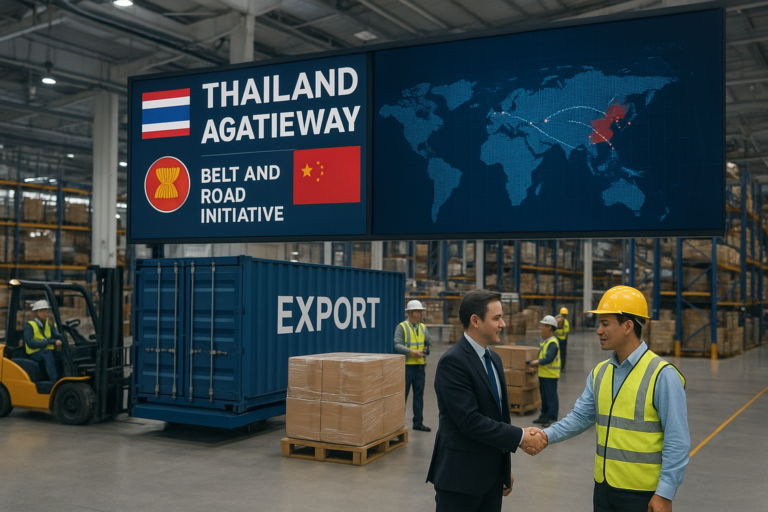
Executive Summary
The key signal is the intensifying economic integration between Thailand and China, which signals a strategic pivot that could reshape Thailand’s regional trade flow and investment landscape. This development matters because it amplifies Thailand’s role as a critical ASEAN hub within China’s broader Belt and Road Initiative, influencing sectoral opportunities, capital allocation, and ASEAN’s intra-regional dynamics. Investors should recognize that these strengthened ties not only diversify Thailand’s sources of foreign investment but also elevate cross-border supply chain integration, with particular relevance for manufacturing, infrastructure, and digital economy sectors.
Key Facts
- Thailand and China have deepened economic cooperation, marked by expanded trade, investment, and strategic partnership frameworks.
- China remains one of Thailand’s largest trading partners and a key source of foreign direct investment.
- There is increased collaboration in infrastructure projects and technology-driven initiatives under the Belt and Road Initiative umbrella.
- Thailand is positioned as a gateway for China’s investments into the broader ASEAN region.
Why It Matters
This development consolidates Thailand’s position as a pivotal economy within ASEAN’s regional supply chains, anchored by China’s strategic outreach. The increased economic interlinkages reduce Thailand’s reliance on traditional Western markets, potentially stabilizing export demand amid global uncertainties. For investors, this implies greater visibility into sectors favored by Chinese capital inflows, such as infrastructure, manufacturing clusters, and emerging digital industries that benefit from technology transfers and joint ventures.
Thailand’s financial markets may see increased foreign portfolio interest from Chinese institutional investors, which can improve liquidity conditions but also elevate sensitivity to geopolitical factors tied to Sino-US tensions. Furthermore, stronger Thailand-China ties could catalyze improvements in cross-border logistics and customs facilitation, lowering operational costs for companies involved in bilateral trade.
However, the reliance on China intensifies exposure to China’s economic cycles and policy shifts, affecting Thailand’s export-driven industries and foreign investment sentiment. For instance, sectors like automotive parts, electronics, and machinery manufacturing that depend on integrated supply chains could face amplified volatility if disruptions occur in Sino-ASEAN trade flows.
Sector Impact
Positive:
- Infrastructure: Increased Chinese financing and technology should accelerate transport and logistics projects, enhancing Thailand’s connectivity.
- Manufacturing: Supply chain integration with Chinese firms will boost export competitiveness and attract additional investment from multinational companies.
- Technology and Digital Economy: Collaborative initiatives with Chinese tech companies can drive innovation and digitization, benefiting listed tech firms and start-ups.
Neutral:
- Banking & Fintech: While enhanced cross-border finance opportunities arise, regulatory frameworks and competitive dynamics remain largely unchanged in the short term.
Risk:
- Exporters in cyclical industries: Heightened dependence on Chinese demand exposes producers to external shocks from China’s economic fluctuations.
- Geopolitical-sensitive sectors: Companies linked to defense or strategic technologies may face increased regulatory scrutiny amid shifting regional tensions.
ASEAN Context
This development reinforces Thailand’s role as a strategic nexus for China’s engagement with ASEAN. By serving as a conduit for investments and trade flows, Thailand stands to amplify its regional influence, potentially attracting supply chain relocations from Chinese provinces toward ASEAN, thus fostering deeper regional economic integration.
However, it also reflects broader ASEAN challenges of balancing China’s growing economic footprint with the interests of other major partners. Thailand’s evolving ties could prompt competitive responses from neighboring ASEAN states seeking to capture similar Chinese investment, influencing capital allocation patterns across the region.
Bottom Line
The escalation of Thailand-China economic ties marks a strategic realignment that embeds Thailand more deeply in regional supply chains backed by China’s capital flows and policy priorities. This trajectory enhances Thailand’s attractiveness for infrastructure and manufacturing investments while increasing sectoral exposure to China’s economic cycles and geopolitical developments. For investors, positioning with exposure to sectors benefiting from this bilateral synergy offers a way to gain from ASEAN’s evolving trade architecture anchored by China’s influence.
Stay Ahead of Thailand and ASEAN Markets
Thailand Investor Brief delivers AI-powered investor intelligence covering Thailand’s economy, markets, policy developments, and ASEAN business trends.
Receive daily insights designed for investors, executives, entrepreneurs, and globally minded professionals.
Join thousands of readers following the signals that matter across Thailand and ASEAN.
Join Thailand Investor Brief FREE
Complete Guide
For a broader investment framework, continue with the Thailand Energy Investment Guide 2026.