Executive Summary
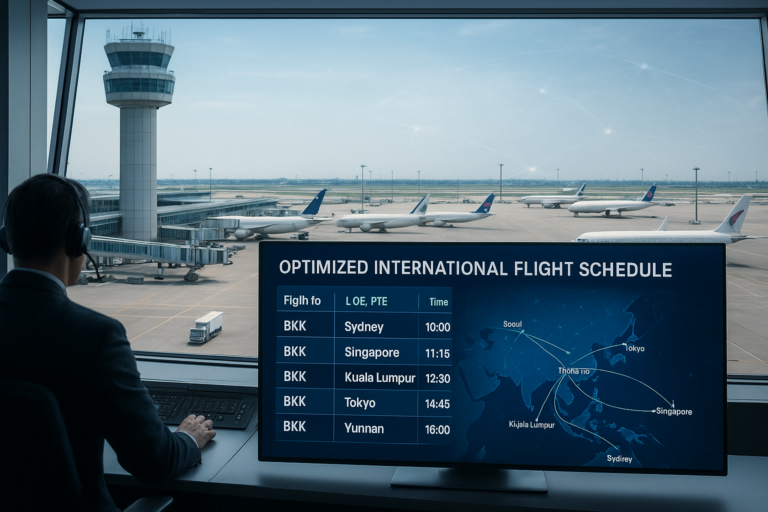
The key signal is the strategic adjustment in Thailand’s international flight routes and airline slots, which signifies a targeted effort to optimize inbound tourism capacity and connectivity. For investors, this signals a potential acceleration in tourism sector recovery and revenue growth, directly impacting airline operators, airport services, hospitality, and ancillary businesses. This development reflects underlying demand recovery trajectories and government or regulatory priorities that influence market access, impacting capital allocation in tourism-related publicly listed companies and private enterprises.
Key Facts
- Thailand has recently altered its international flight routes and airline slot allocations.
- These changes involve strategic recalibrations designed to manage inbound international passenger flows.
- The adjustments align with Thailand’s broader tourism sector reopening and recovery efforts post-pandemic.
Why It Matters
Adjustments to international flight routes and airline slot allocations are a tangible lever to control and stimulate inbound tourism volumes. Flight capacity is a direct constraint and enabler of tourist arrivals, affecting revenue streams for airlines, airports, and accommodation providers. For foreign and local investors, changes in route and slot policy offer a predictive signal of which corridors and airports will see increased traffic, guiding investment focus. Furthermore, the prioritization of certain routes may reflect shifting market demand, such as targeting higher-yield source markets or operational efficiency considerations, which affect the quality and sustainability of tourism revenues.
For Thailand, the efficient use of limited airport capacity, especially at congested hubs like Suvarnabhumi and Don Mueang, is critical. More optimized slot allocations can improve on-time performance, reduce operational costs for airlines, and enhance traveler experience, thereby reinforcing Thailand’s competitive positioning in regional tourism. In economic terms, increased international flight capacity supports greater foreign exchange earnings from tourism, an important component of Thailand’s external revenue. It also has multiplier effects on domestic suppliers of goods and services linked to tourism.
Sector Impact
Positive:
- Airlines: Improved and strategically optimized routes and slots can increase operational efficiency, passenger numbers, and profitability.
- Airport Services: Higher slot utilization correlates to increased airport revenue from fees and retail operations.
- Hospitality and Tourism Services: Greater international arrival capacity supports higher occupancy rates and service demand.
Neutral:
- Domestic Transport: Limited immediate impact unless linked with integration of international arrivals to local networks.
Risk:
- Regional Secondary Airports: May face reduced slot allocations if route concentration favors primary hubs, potentially limiting growth in less developed areas.
- Smaller Airlines: Could risk slot access if larger carriers dominate optimally allocated routes.
ASEAN Context
This development highlights Thailand’s role as a regional aviation and tourism hub in ASEAN, strengthening connectivity routes essential for cross-border tourism and business travel. Adjusting international flight capacities in Thailand impacts ASEAN’s broader tourism integration by potentially attracting or diverting passenger flows within the region. Given competition among ASEAN countries for inbound tourists, Thailand’s route and slot strategies will influence intra-regional aviation dynamics and the distribution of tourist traffic, affecting airline alliances and transit patterns. This underscores Thailand’s priority to maintain leadership in ASEAN’s aviation and tourism sectors, alongside initiatives for regional connectivity enhancement.
Bottom Line
The recalibration of Thailand’s international flight routes and airline slots signals robust underlying recovery and strategic prioritization in its inbound tourism infrastructure. Investors focused on the tourism ecosystem should recognize the potential for accelerated earnings growth in airlines, airports, and hospitality sectors tied to these capacity shifts. While the move supports Thailand’s competitive positioning within ASEAN, it carries risks for regional airports and smaller carriers. Overall, this development provides a clear signal of the government’s or regulators’ approach to managing tourism recovery and infrastructure utilization.
Stay Ahead of Thailand and ASEAN Markets
Thailand Investor Brief delivers AI-powered investor intelligence covering Thailand’s economy, markets, policy developments, and ASEAN business trends.
Receive daily insights designed for investors, executives, entrepreneurs, and globally minded professionals.
Join thousands of readers following the signals that matter across Thailand and ASEAN.
Join Thailand Investor Brief FREE
Complete Guide
For a broader investment framework, continue with the Thailand Energy Investment Guide 2026.