Executive Summary
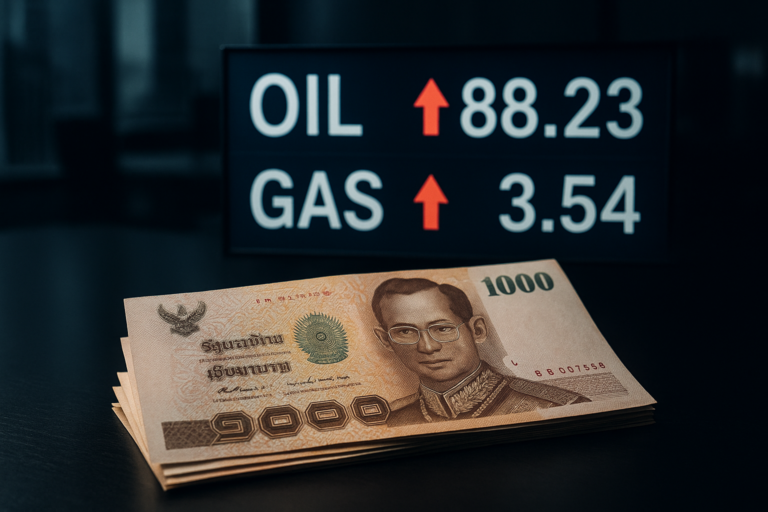
The key signal is the direct vulnerability of Thailand’s energy-dependent economy to escalating energy prices driven by the Middle East conflict, which is creating heightened inflationary pressures and external balance risks. This matters because Thailand heavily relies on imported energy, and sudden price shocks undermine fiscal stability, raise production costs for export sectors, and pressure the Thai baht through increased import bills. The development demands close attention to how energy market volatility will influence inflation persistence, corporate earnings, and capital flows, thereby reshaping Thailand’s macroeconomic trajectory over the medium term.
Key Facts
- The Middle East war has intensified geopolitical risks, elevating global oil and gas prices.
- Thailand is a net importer of energy, with crude oil and natural gas imports key components of its total import basket.
- Energy prices in Thailand have a significant pass-through effect to consumer inflation and producer costs.
Why It Matters
Thailand’s economic fundamentals are particularly exposed to external energy price shocks because of its heavy dependence on energy imports, which constitute a large share of total import costs. Higher international oil prices increase the cost of fuel, electricity, and transportation, which translates into higher production costs for manufacturers and service providers. This cost inflation risks eroding export competitiveness, especially for energy-intensive Thai industries such as petrochemicals, automotive parts, and logistics.
The Thailand baht typically experiences depreciation pressures when import bills surge, worsening the trade balance and negatively impacting foreign exchange reserves and investor sentiment. Such currency movements could increase the cost of dollar-denominated corporate debt and raise borrowing costs for Thai firms. This cycle amplifies financial vulnerabilities given Thailand’s significant corporate sector exposure to global funding markets.
From a macroeconomic perspective, sustained energy price increases contribute to headline inflation persistence, complicating monetary policy decisions by the Bank of Thailand. Elevated inflation reduces real income for consumers and may suppress domestic demand growth, which is crucial for Thailand’s GDP composition. The challenge for policymakers lies in balancing inflation containment with growth-supportive measures amid external shocks.
Sector Impact
Positive:
Energy sector – Elevated oil and gas prices potentially increase revenues and profitability for domestic energy trading companies and utilities linked to energy imports.
Neutral:
Tourism sector – Although energy price inflation raises operational costs for airlines and hospitality, tourism demand driven by international arrivals and regional reopening may provide offsetting revenue support.
Risk:
Manufacturing and export sectors – Higher energy input costs squeeze margins and could impair competitiveness in global markets where cost-push inflation drives up product prices.
ASEAN Context
This development is highly relevant across ASEAN as many member states share a reliance on oil and gas imports subject to global geopolitical volatility. Thailand’s experience highlights the regional exposure to Middle East conflicts that disrupt energy supply chains and inflate prices. Regional trade balances and currency dynamics may synchronize under shared energy cost pressures, emphasizing the importance of ASEAN collaboration on energy security and diversification strategies.
Bottom Line
The ongoing Middle East conflict exposing Thailand to rising energy prices underscores a critical macroeconomic risk vector, exacerbating inflation and currency vulnerabilities. Energy importers and energy-intensive exporters face rising costs threatening earnings, while policymakers confront tightening trade and inflation dynamics. Investors should recognize that Thailand’s macro stability, corporate credit profiles, and export competitiveness hinge significantly on managing these external energy shocks.
Stay Ahead of Thailand and ASEAN Markets
Thailand Investor Brief delivers AI-powered investor intelligence covering Thailand’s economy, markets, policy developments, and ASEAN business trends.
Receive daily insights designed for investors, executives, entrepreneurs, and globally minded professionals.
Join thousands of readers following the signals that matter across Thailand and ASEAN.
Join Thailand Investor Brief FREE
Complete Guide
For a broader investment framework, continue with the Thailand Tourism Investment Guide 2026.