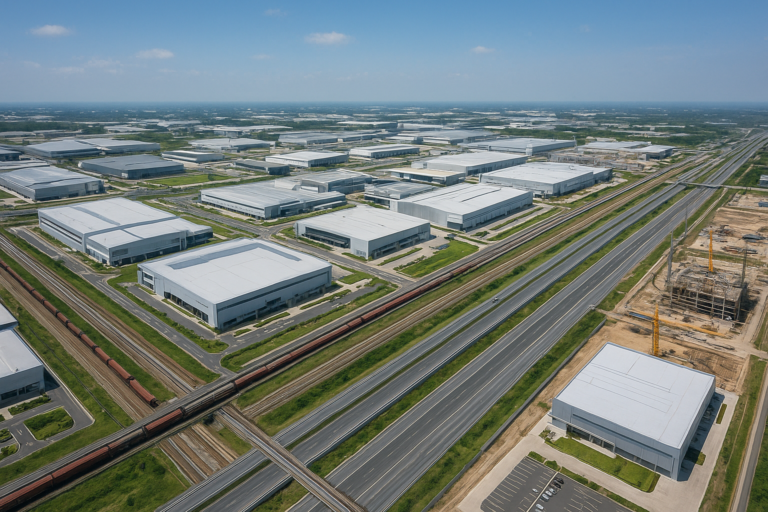
Executive Summary
The key signal is the continuation of the Eastern Economic Corridor (EEC) policy, which underscores Thailand’s commitment to sustaining strategic, long-term investment frameworks. This policy continuity reassures investors of a stable regulatory and development environment within one of Southeast Asia’s most crucial industrial hubs. For investors, this stability matters as it reduces execution risk around infrastructure and industrial incentives, preserving the EEC’s role as an anchor for capital-intensive projects and foreign direct investment.
The Eastern Economic Corridor policy continuity implies not only ongoing support for current projects but an enduring framework that uplifts Thailand’s competitiveness in advanced manufacturing, logistics, and innovation sectors. Maintaining momentum in the EEC aligns with Thailand’s broader industrial strategy and enhances the corridor’s position in ASEAN supply chains, making it a focal point for regional capital allocation and technology-driven development.
Key Facts
- Thailand has confirmed policy continuity for the EEC framework without announced modifications.
- The EEC remains a priority area for infrastructure, industrial estates, and foreign investment incentives.
- Previous EEC initiatives focus on high-tech manufacturing, transport links, and integrated logistics.
Why It Matters
Policy continuity in the EEC signals stable government backing amid global economic uncertainties, thereby ensuring that projects initiated under the EEC umbrella are less exposed to abrupt regulatory shifts. This consistency is essential for capital-intensive sectors where investment horizons extend over many years, such as automotive, electronics, and aerospace industries prevalent in the corridor.
For economic actors, the policy signals reduced political and regulatory risk, which is critical to maintaining Thailand’s attractiveness versus competing ASEAN countries offering alternative investment zones. This reduces potential disruptions to cash flow forecasts, project viability analyses, and financing structures for enterprises operating within the corridor.
Investment Implications
Investors benefit from this sustained policy environment through enhanced certainty over incentives, infrastructure progress, and bureaucratic predictability. The EEC policy continuity allows for more accurate capital expenditure planning and risk management, especially for foreign direct investors whose mandates often require stable regulatory landscapes.
Institutional investors and multinationals engaged in sectors prioritized under the EEC—such as smart electronics, biofuels, and next-generation automotive—can allocate capital with greater confidence in the returns’ stability. This fosters an environment where ancillary industries, including logistics and industrial real estate, may experience consistent demand growth tied to the corridor’s development trajectory.
Sector Impact
Positive
- Manufacturing: Continued support enhances long-term project viability in high-tech and automotive manufacturing sectors concentrated in the EEC.
- Infrastructure & Logistics: Stable policy underpins ongoing infrastructure development and integrated logistics solutions, facilitating export efficiency and supply chain optimization.
- Industrial Estates & Real Estate: Reinforced demand for industrial land and facilities aligned with EEC targets, improving asset utilization and potential capital appreciation.
Neutral
- Finance: While policy continuity reduces investment risk, broader macro-financial conditions remain dominant factors influencing cost of capital and lending dynamics.
- Tourism: The development focus remains primarily industrial; no immediate direct implications for tourism sector revenues or infrastructure.
Risk
- Political/Execution Risk: Although policy is stable, execution risks around timeline adherence, project management, and bureaucratic efficiencies remain.
- External Economic Risks: The EEC’s export-oriented sectors may still face vulnerabilities from global supply chain disruptions and trade dynamics outside Thailand’s immediate control.
Strategic Signals
The policy continuity in the EEC signals Thailand’s prioritization of industrial and infrastructure-led growth as a backbone for economic competitiveness. It reflects a strategic choice to anchor ASEAN positioning on technology-driven and export-oriented industries within a clearly demarcated special economic zone.
This stability in development direction encourages clustering effects among manufacturers, suppliers, and service providers in the corridor, reinforcing network effects essential for innovation ecosystems and productivity gains. Further, it provides Thailand with a calibrated platform for attracting higher-value added production rather than competing solely on lower-cost labor.
ASEAN Context
This development appears primarily domestic in nature with limited immediate ASEAN-wide implications.
Risks
Key risks include potential delays and administrative hurdles in implementing EEC projects, which could dampen investor confidence over time if prolonged. External risks such as global trade tensions and supply chain volatility continue to indirectly affect the corridor’s export-dependent industries.
While policy continuity reduces regulatory uncertainty, it does not eliminate operational or geopolitical risks that affect investor outcomes within the EEC ecosystem.
Bottom Line
Maintaining policy continuity for the Eastern Economic Corridor is a significant stabilizing signal for Thailand’s investment climate, particularly in capital-intensive and strategic industrial sectors. This reassures institutional and foreign investors about Thailand’s long-term commitment to high-tech manufacturing and infrastructure development. While execution and external economic risks remain, the policy backdrop provides a durable framework that underpins the corridor’s role in Thailand’s industrial modernization and ASEAN competitiveness.
Thailand Investor Brief
Stay Ahead of Thailand and ASEAN Markets
Explore Thailand Signal Capital’s flagship investor intelligence service,
including free market insights and premium daily briefings for investors,
executives, entrepreneurs, and ASEAN-focused professionals.
- Thailand and ASEAN market intelligence
- Investment implications and strategic signals
- FREE and PRO briefing options
Frequently Asked Questions
Why does this development matter for Thailand investors?
This development matters because it may affect Thailand’s investment
environment through policy direction, sector exposure, trade dynamics,
capital allocation, or ASEAN market positioning.
Which sectors could be affected?
The most relevant sectors depend on the specific development, but investors
should assess exposure across policy-sensitive industries, financial
services, trade-linked sectors, infrastructure, property, tourism, energy,
and ASEAN-facing businesses.
How does this affect Thailand’s position in ASEAN?
The ASEAN impact depends on whether the development changes regional
competitiveness, cross-border investment, supply chains, or investor
sentiment. Thailand’s role should be assessed relative to nearby markets
such as Singapore, Malaysia, Vietnam, Indonesia, and Cambodia.
What should investors watch next?
Investors should watch implementation details, policy follow-through,
sector-level responses, corporate earnings signals, regulatory changes,
and whether the development creates measurable shifts in demand, costs,
or capital flows.
Complete Guide
For a broader investment framework, continue with the Thailand Tourism Investment Guide 2026.