Executive Summary
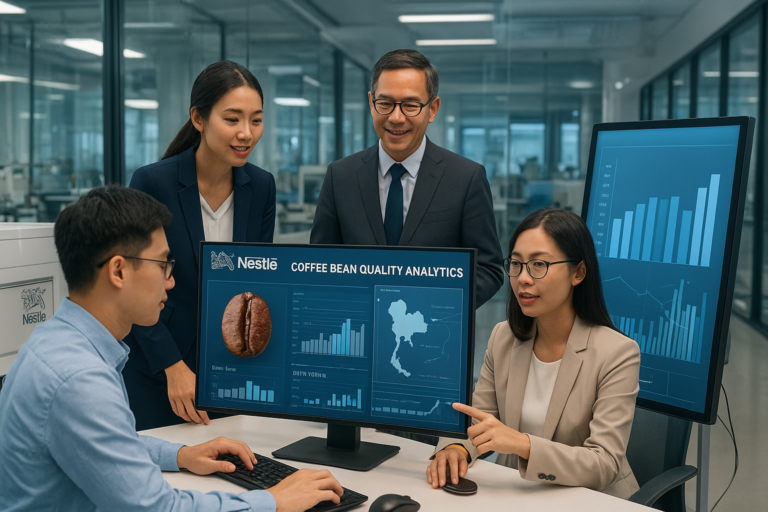
The key signal is Nestlé’s strategic investment to establish an AI coffee innovation hub in Thailand, underscoring the country’s rising importance as a center for technology-enabled agribusiness and consumer goods development within ASEAN. This move highlights Thailand’s evolving role beyond traditional agricultural production toward becoming a technology-driven innovation ecosystem, particularly in food and beverage (F&B) sectors.
For investors, this development intensifies Thailand’s attractiveness not only as a manufacturing base but also as a locus for research and development (R&D) and digital transformation within the consumer goods value chain. The Nestlé AI coffee hub introduces advanced data-driven approaches to product development and supply chain efficiencies, aligning with global shifts toward precision agriculture and sustainability, directly impacting Thai coffee exporters and technology providers.
This investment bears relevance for sector participants integrating AI and digital technologies, showing Thailand’s growing capabilities in innovation infrastructure. It also signals an investor confidence boost in Thailand’s business ecosystem to support multinational corporations’ innovation endeavors, setting a precedent for further capital inflows in related tech-enabled agritech and F&B segments.
Key Facts
- Nestlé is establishing an AI-driven coffee innovation hub in Thailand.
- The hub will focus on leveraging artificial intelligence to enhance coffee product development and potentially optimize supply chains.
- The initiative is part of Nestlé’s broader strategy to integrate advanced technologies into its manufacturing and R&D processes.
- Thailand serves as the location for this hub, demonstrating the company’s confidence in the local ecosystem’s capability to support high-tech innovation.
Why It Matters
This investment signals Thailand’s emerging status as more than just a production hub for agribusiness, shifting toward becoming a regional node for innovation in food technology. It reflects growing investor recognition of Thailand’s infrastructural readiness and workforce capabilities to host AI-driven initiatives, a profile historically associated with larger markets in Asia.
The move catalyzes the convergence of traditional agricultural exports, such as coffee, with digital innovation, potentially enhancing value addition on Thai coffee products. This can lead to improved quality, traceability, and sustainable production methods, attributes increasingly demanded by international markets. Therefore, this development enhances Thailand’s export competitiveness through technology adoption rather than volume alone.
For Thailand’s business environment, Nestlé’s strategic hub validates that leading multinational corporations view the country as a viable R&D location, which can encourage complementary investments from technology firms and startups, generating ecosystem effects that support innovation-led growth.
Investment Implications
Capital allocation may increasingly favor Thailand’s technology and innovation infrastructure related to agribusiness and consumer goods. Investors involved with listed companies or private ventures active in agritech, AI applications, or supply chain digitization stand to benefit from amplified interest and potential partnership opportunities stemming from Nestlé’s initiative.
Thai coffee exporters might experience demand shifts toward higher quality, traceable products, incentivizing upgrades in farming practices and integration with AI-driven analytics. This can increase barriers to entry for low-cost producers but create premium market segments.
The greater focus on AI and R&D also introduces cost considerations for businesses adapting to new digital standards and potential competition for skilled labor, influencing wage dynamics in the tech and agribusiness sectors.
For multinational corporations, the Nestlé AI hub exemplifies an investment case for leveraging Thailand as a regional innovation base, especially where cost competitiveness aligns with access to emerging technologies and local talent.
Sector Impact
Positive
- Agribusiness: Enhanced product quality and traceability from AI adoption increase competitiveness of Thai coffee exports.
- Technology and AI: Growth in demand for AI solutions tailored to agriculture and F&B sectors boosts local tech ecosystem opportunity.
- Consumer Goods: Integration of innovation strengthens product differentiation and international brand positioning.
Neutral
- Financial Services: Impact limited to potential indirect demand for tech financing; no direct implications evident.
- Tourism: No significant immediate effects on tourism or hospitality sectors from this development.
Risk
- Labor Market: Potential competition for specialized talent may increase wage pressure in tech and agritech sectors.
- Technology Adoption: Smaller local producers could face challenges integrating AI-driven processes, risking market exclusion.
Strategic Signals
Nestlé’s AI coffee hub signals a strategic elevation of Thailand’s role within supply chains toward innovation and technology integration. It signals that multinational corporations are shifting from a low-cost production focus to building capabilities in R&D and digital innovation in Thailand, likely catalyzing further ecosystem development.
This development also implies Thailand’s business environment increasingly supports complex, technology-driven initiatives, which could attract partnerships, skill development, and knowledge transfer activities. Such trends align Thailand with the broader global narrative of digital transformation in agribusiness and consumer packaged goods supply chains.
ASEAN Context
This development appears primarily domestic in nature with limited immediate ASEAN-wide implications.
Risks
Execution risks include the challenges of successfully integrating AI within Thailand’s existing agribusiness infrastructure and ensuring technology adoption among local coffee producers. If technology utilization remains confined to corporate operations without sufficient spillover, broad sector uplift may be limited.
Workforce constraints could pose a risk, as demand for AI and data analytics specialists may outpace local supply, driving wage inflation and creating talent bottlenecks.
The scale and speed of innovation may also pressure existing SMEs and smaller producers unable to keep pace with technological advancements, potentially leading to increased market concentration.
Bottom Line
Nestlé’s AI coffee hub investment signals a progressive shift in Thailand’s economic landscape toward technologically advanced agribusiness and consumer goods sectors. This positions Thailand as a credible innovation hub in Southeast Asia, attracting further multinational R&D activities and reinforcing the country’s role in value-added exports. Vital for investors is the recognition that Thailand’s competitive advantage is evolving, favoring innovation capability alongside traditional cost competitiveness.
Complete Guide
For a broader investment framework, continue with the Thailand Macro Investment Guide 2026.
Thailand Investor Brief PRO
Want deeper institutional-grade Thailand market intelligence?
Thailand Investor Brief PRO delivers three daily briefings with strategic market analysis, investment implications, and ASEAN intelligence beyond the public news cycle.
Related Thailand Investment Intelligence
- Thailand Manufacturing Output 2026: Strategic Signals for Investors
- Thailand AI Readiness and Technology Adoption: Investment Implications and Strategic Insights
- Analyzing the Investment Signals from AI-Related Stocks in Thailand
- Thailand Semiconductor Industry Investment: Strategic Signal for Tech Ecosystem Expansion
Frequently Asked Questions
Why does this development matter for Thailand investors?
This development matters because it may affect Thailand’s investment environment through policy direction, sector exposure, trade dynamics, capital allocation, or ASEAN market positioning.
Which sectors could be affected?
The most relevant sectors depend on the specific development, but investors should assess exposure across policy-sensitive industries, financial services, trade-linked sectors, infrastructure, property, tourism, energy, and ASEAN-facing businesses.
How does this affect Thailand’s position in ASEAN?
The ASEAN impact depends on whether the development changes regional competitiveness, cross-border investment, supply chains, or investor sentiment. Thailand’s role should be assessed relative to nearby markets such as Singapore, Malaysia, Vietnam, Indonesia, and Cambodia.
What should investors watch next?
Investors should watch implementation details, policy follow-through, sector-level responses, corporate earnings signals, regulatory changes, and whether the development creates measurable shifts in demand, costs, or capital flows.