Executive Summary
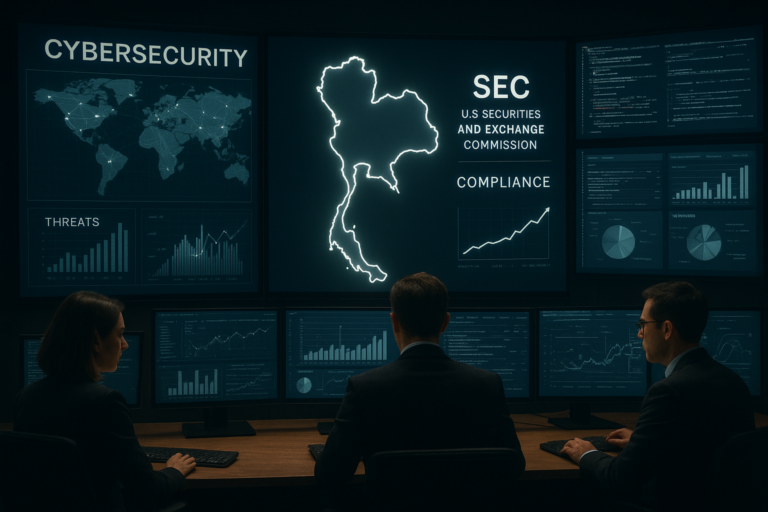
The key signal is an elevated global focus on cybersecurity resilience and regulatory scrutiny, as highlighted by the recent SEC data breach monitoring activities. For Thailand investors, this development signals increasing pressure on transparency requirements and data protection standards that impact listed companies and financial institutions. The escalation in monitoring reflects technological and regulatory shifts demanding stronger cybersecurity infrastructures, which will affect Thai firms connected with capital markets and cross-border compliance.
This matters for the Thailand investment landscape because public disclosures linked to security vulnerabilities could influence investor confidence and valuation multiples for domestic firms with exposure to US or international capital markets. Furthermore, sectors reliant on sensitive data management, including banking, fintech, and listed companies, face operational and compliance cost implications. Understanding the SEC’s focus enables market participants to better assess second-order risks related to reputational damage, regulatory sanctions, and increased oversight.
Key Facts
- The US Securities and Exchange Commission (SEC) has intensified data breach monitoring efforts.
- The monitoring targets vulnerabilities in data handling and cybersecurity across listed firms and market participants.
- The development reflects broader regulatory emphasis on transparency and breach disclosures.
- Details about the specific nature or scope of compromised data within Thailand-exposed entities remain unclear.
Why It Matters
This development signals an intensification of cybersecurity as a material investment risk factor with direct regulatory oversight. For Thailand, where several listed companies and financial institutions maintain international capital ties, the SEC’s monitoring heightens the importance of aligning with global data protection standards. Non-compliance may trigger not only legal and reputational risks but also affect foreign investment perceptions.
Operationally, firms in Thailand face pressure to upgrade cybersecurity infrastructures, data governance, and incident response capabilities. This can influence cost structures and corporate governance priorities. Failure to meet emerging norms may elevate borrowing costs for exposed companies due to risk premiums associated with cybersecurity lapses.
Market participants, particularly fund managers with Thai assets, will integrate cybersecurity resilience as a factor in due diligence and portfolio allocation, affecting capital flows within Thailand’s market.
Investment Implications
Investors and executives need to incorporate enhanced risk assessments around cybersecurity frameworks within Thai portfolio companies, especially those with SEC reporting obligations or cross-listings. Elevated monitoring signals that data breach incidents are not only a technical issue but a financial and compliance risk capable of eroding market confidence swiftly.
Capital allocation decisions should factor in potential increases in compliance expenditures and the possible short-term impact of breach disclosures on valuations. This affects sectors such as financial services and technology, where data integrity is central.
Executives in Thailand must prioritize transparent and timely communication regarding cybersecurity to maintain investor trust and reduce market volatility triggered by emerging breach reports.
Sector Impact
Positive
- Cybersecurity Services: Increased demand for monitoring and protection solutions as firms seek compliance and risk mitigation.
Neutral
- Manufacturing and Agriculture: Limited immediate impact as these sectors are less exposed to SEC regulatory frameworks or sensitive data handling obligations.
Risk
- Financial Services and Banking: Heightened exposure to breach disclosures risks, increased compliance and operational costs impacting profitability.
- Listed Companies with US Exposure: Potential valuation pressure following breach reports or regulatory penalties.
Strategic Signals
The SEC’s heightened data breach monitoring signals a shift towards integrating cybersecurity as a core governance and investment criterion globally. For Thailand, this underscores the growing interconnection of domestic markets with international regulatory frameworks and investor expectations. Companies will likely face increasing demands for transparency, advanced risk management, and robust data governance as essential to capital market access and competitiveness.
This development also signals an emerging need for Thailand’s policy and regulatory environment to better align with cross-border standards to avoid investor concerns about informational asymmetries and data security weaknesses. It reflects a structural investor preference transition toward resilience and disclosure rigor, embedded within global capital market practices.
ASEAN Context
This development appears primarily domestic in nature with limited immediate ASEAN-wide implications.
Risks
Execution risks include Thai firms’ potentially inadequate cybersecurity measures or fragmented internal controls, increasing breach vulnerability. There is reputational and financial risk linked to delayed or incomplete disclosures under rising international scrutiny.
Market risks stem from investor reactions to publicized data breaches affecting confidence and valuation volatility. Financial risks include increased regulatory compliance costs and potentially higher capital raising costs for exposed firms.
Bottom Line
The SEC’s data breach monitoring constitutes a key signal of escalating global cybersecurity regulatory pressure that carries material implications for Thailand’s capital market participants. It shifts cybersecurity from an operational issue to a core aspect of investor risk evaluation and corporate governance. Firms and investors must recognize compliance and transparency as critical factors influencing Thailand’s investment attractiveness in internationally linked sectors.
Thailand Investor Brief
Stay Ahead of Thailand and ASEAN Markets
Explore Thailand Signal Capital’s flagship investor intelligence service,
including free market insights and premium daily briefings for investors,
executives, entrepreneurs, and ASEAN-focused professionals.
- Thailand and ASEAN market intelligence
- Investment implications and strategic signals
- FREE and PRO briefing options
Frequently Asked Questions
Why does this development matter for Thailand investors?
This development matters because it may affect Thailand’s investment
environment through policy direction, sector exposure, trade dynamics,
capital allocation, or ASEAN market positioning.
Which sectors could be affected?
The most relevant sectors depend on the specific development, but investors
should assess exposure across policy-sensitive industries, financial
services, trade-linked sectors, infrastructure, property, tourism, energy,
and ASEAN-facing businesses.
How does this affect Thailand’s position in ASEAN?
The ASEAN impact depends on whether the development changes regional
competitiveness, cross-border investment, supply chains, or investor
sentiment. Thailand’s role should be assessed relative to nearby markets
such as Singapore, Malaysia, Vietnam, Indonesia, and Cambodia.
What should investors watch next?
Investors should watch implementation details, policy follow-through,
sector-level responses, corporate earnings signals, regulatory changes,
and whether the development creates measurable shifts in demand, costs,
or capital flows.
Complete Guide
For a broader investment framework, continue with the Thailand Tourism Investment Guide 2026.