Executive Summary
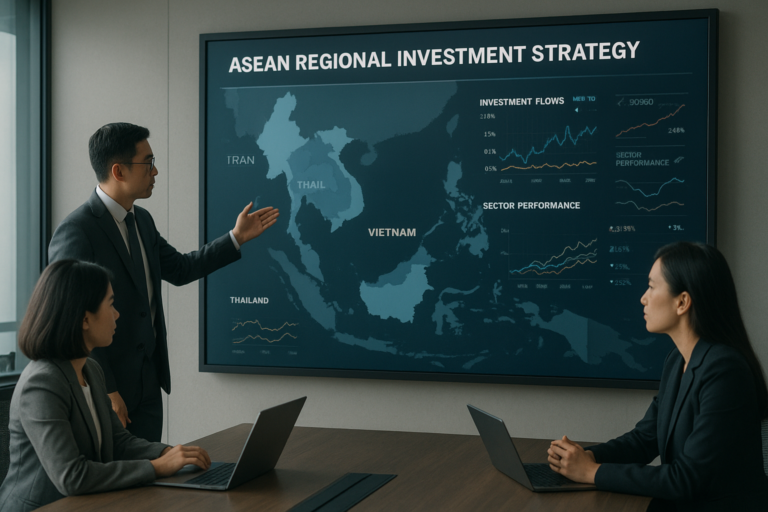
The key signal is a shifting pattern in investment attractiveness across Southeast Asia that directly challenges Thailand’s role as a regional investment hub. For investors, this development highlights an evolving competitive landscape within ASEAN, underscoring the urgency for Thailand to re-evaluate its comparative advantages and sector focus amidst growing regional diversification and capital allocation changes. Understanding this reconfiguration is crucial for assessing where Thailand stands in the Southeast Asia investment comparison and its implications for long-term investment strategies.
This shift matters because it directly influences capital flows, sector growth prospects, and Thailand’s ability to sustain its prominence in manufacturing, services, and emerging industries. The Southeast Asia investment comparison framework reveals that Thailand’s established infrastructure and market depth are being reassessed against rising competitors, affecting valuation benchmarks, risk premiums, and investor confidence. Such dynamics are especially pertinent for institutional investors and multinational corporations optimizing their ASEAN portfolios.
Key Facts
- Investment trends across Southeast Asia indicate a redistribution of capital among ASEAN economies.
- Thailand remains a key player but faces increased competition from neighbors with emerging capabilities.
- The comparative analysis involves sectors including manufacturing, logistics, digital services, and energy.
- Foreign direct investment inflows are influenced by sectoral shifts and regional economic strategies.
Why It Matters
This development elevates the significance of understanding Thailand’s competitive status within ASEAN’s broader marketplace. Increased regional competition alters risk-reward calculations for investors allocating capital in Southeast Asia, making Thailand’s traditional strengths less dominant in certain sectors. For example, firms reliant on Thailand’s manufacturing ecosystem may experience pressure from countries offering lower production costs or enhanced technological incentives. Additionally, shifts in regional energy sourcing and digital infrastructure investments recalibrate Thailand’s role in supply chains and service markets.
For businesses, the recalibration prompts reassessment of operational footprints and partnership strategies within ASEAN. It amplifies the necessity to leverage Thailand’s unique institutional strengths while addressing areas where peers have gained advantages, such as regulatory efficiency or innovation ecosystems. This context reframes investment due diligence and capital allocation decisions, underscoring the importance of granular Southeast Asia investment comparison analyses tailored to sector-specific realities and Thailand’s evolving position.
Investment Implications
Investors should consider the impact on portfolio diversification within ASEAN, recognizing that Thailand’s relative appeal may fluctuate by sector and asset class. The Southeast Asia investment comparison indicates potential shifts in capital flows, which impact valuations and borrowing costs for Thai companies, particularly in capital-intensive sectors. It also suggests a need to evaluate Thai-listed companies’ competitive positioning against regional peers, especially those in export-oriented industries sensitive to production cost and trade advancements.
Executives must integrate these insights into strategic planning, balancing reliance on Thailand’s established infrastructure with contingency for rising regional competitors. Entrepreneurs should assess sector entry points where Thailand’s advantages remain robust, such as its market size and integration infrastructure, while innovating to address emerging competitive challenges. Market participants evaluating Thailand must recalibrate risk assessments based on evolving economic and policy signals derived from cross-country investment comparisons.
Sector Impact
Positive
- Manufacturing: Thailand’s robust industrial base and export infrastructure continue to provide an operational anchor despite regional competition.
Neutral
- Energy: Incremental regional diversification tempers risks but offers limited immediate advantage for Thailand’s energy import dynamics.
- Digital Services: Competitive innovation ecosystems in neighboring countries create a more level playing field, requiring adaptation but not outright displacement.
Risk
- Logistics and Trade Facilitation: Emerging ASEAN hubs exert pressure on Thailand’s role as a regional logistics nexus, threatening associated service sector growth.
- Investment Sentiment: Heightened cross-border investment competition may increase volatility in foreign capital inflows impacting Thai asset valuations.
Strategic Signals
The development signals an evolving ASEAN economic architecture where Thailand’s historical investment attractiveness is increasingly challenged by up-and-coming regional players. It reflects a tightening capital market environment that prioritizes agility in policy and economic competitiveness. Thailand’s position as an ASEAN investment anchor requires strategic adaptation, particularly in leveraging its logistical infrastructure, trade agreements, and workforce capabilities to maintain differentiation.
Second-order effects include heightened intra-regional capital reallocation, potential shifts in supply chain configurations, and a greater emphasis on technology adoption to sustain competitiveness. The pattern also implies investor preference for diversified ASEAN exposure, prompting Thailand to refine sector focus and investment promotion strategies accordingly.
ASEAN Context
This development reaffirms the dynamic and competitive nature of the ASEAN investment landscape. It underscores the necessity for Thailand to continually benchmark itself against regional peers to safeguard and enhance its investment appeal. Although not displacing Thailand’s overall role, the shifting landscape invites recalibrated ASEAN integration efforts and cross-border economic cooperation to optimize collective and individual member benefits.
Risks
The principal risks stem from execution challenges in maintaining Thailand’s competitiveness amid emerging ASEAN rivals. These include the potential erosion of foreign direct investment amid capital reallocation, increased sectoral competition limiting market share, and volatility in investor sentiment influenced by regional comparisons. Failure to adapt strategically could exacerbate cost disadvantages and reduce investment inflows critical to sectors dependent on foreign capital. Additionally, uncertainty around policy responses and global economic conditions compounds these risks.
Bottom Line
The changing Southeast Asia investment landscape signals the need for Thailand investors and market participants to incorporate comparative regional dynamics into their analyses. Thailand’s continued prominence depends on proactive adaptation to competitive pressures and leveraging its unique economic attributes. The evolving investment pattern impacts sector valuations, capital flows, and strategic positioning within ASEAN, delivering a nuanced picture essential for sophisticated investment decision-making.
Complete Guide
For a broader investment framework, continue with the Thailand Macro Investment Guide 2026.
Thailand Investor Brief PRO
Want deeper institutional-grade Thailand market intelligence?
Thailand Investor Brief PRO delivers three daily briefings with strategic market analysis, investment implications, and ASEAN intelligence beyond the public news cycle.
Related Thailand Investment Intelligence
- Analysing Thailand SME Export Challenges: Implications for Investors and the Economy
- Thailand vs Vietnam: Which Is Better for Manufacturing Investment?
- Investment Implications of Indonesia E-commerce Tax Policies for Thailand Investors
- Investment Insight: Strategic Implications of the Medical Aesthetics Industry in Thailand
- Investment Landscape Comparison: Thailand vs Malaysia
Frequently Asked Questions
Why does this development matter for Thailand investors?
This development matters because it may affect Thailand’s investment environment through policy direction, sector exposure, trade dynamics, capital allocation, or ASEAN market positioning.
Which sectors could be affected?
The most relevant sectors depend on the specific development, but investors should assess exposure across policy-sensitive industries, financial services, trade-linked sectors, infrastructure, property, tourism, energy, and ASEAN-facing businesses.
How does this affect Thailand’s position in ASEAN?
The ASEAN impact depends on whether the development changes regional competitiveness, cross-border investment, supply chains, or investor sentiment. Thailand’s role should be assessed relative to nearby markets such as Singapore, Malaysia, Vietnam, Indonesia, and Cambodia.
What should investors watch next?
Investors should watch implementation details, policy follow-through, sector-level responses, corporate earnings signals, regulatory changes, and whether the development creates measurable shifts in demand, costs, or capital flows.