Executive Summary
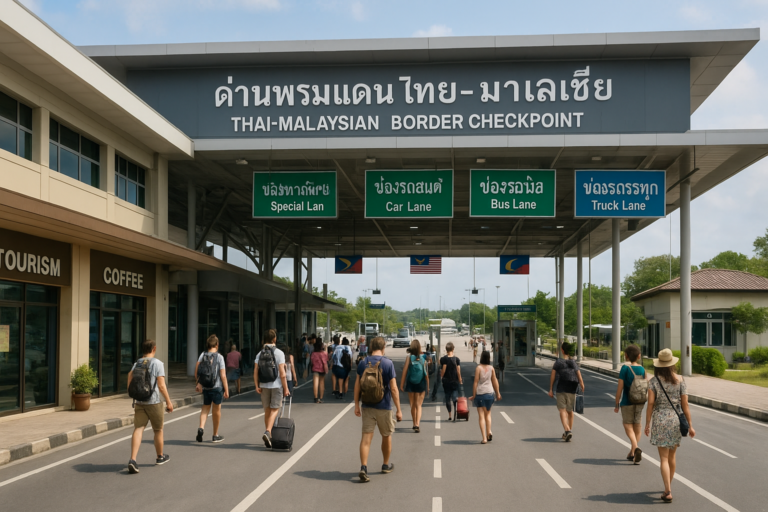
The key signal is that investment in Thai-Malaysian checkpoint tourism infrastructure reflects a strategic enhancement of cross-border connectivity aimed at revitalizing and scaling regional tourism flows. This signals a targeted effort to stimulate local economies at border regions while strengthening Thailand’s position as a tourism hub in the ASEAN region, directly impacting sectors tied to hospitality, transport, and retail consumption. For investors, it highlights a structurally supportive environment for tourism-related assets, particularly in border provinces where infrastructure upgrades will augment visitor capacity and improve operational efficiency.
This development matters for investors because it aligns infrastructure improvements directly with demand recovery and regional integration, offering clearer visibility on tourism growth trajectories in key transit corridors. Given Thailand’s dependence on inbound tourism revenue, enhancing the throughput capacity and experience at international checkpoints is a tangible lever to expand foreign visitation sustainably. For institutional investors, this infrastructure enhancement acts as a signal to reassess capital allocations in tourism-related real estate, transport services, and consumer-facing businesses poised to benefit from higher cross-border traffic.
Incorporating the main keyword, Thai-Malaysian checkpoint tourism infrastructure upgrades serve as a critical axis for capturing pent-up regional travel demand and diversifying tourism’s geographic footprint in Thailand. Improved checkpoint facilities reduce operational bottlenecks and can lead to increased visitor length of stay and spending, directly supporting revenue growth for local enterprises and hospitality providers. As Thailand continues to compete regionally for tourism market share, efficiency and accessibility gains at border checkpoints become meaningful competitive advantages in ASEAN’s tourism landscape.
Key Facts
- The Thai-Malaysian checkpoint has undergone tourism infrastructure enhancements.
- Upgrades target cross-border travel efficiency and capacity enhancements.
- The development is situated at a critical bilateral crossing connecting southern Thailand to Malaysia.
- Improvements are designed to support increasing numbers of tourists and facilitate smoother transit.
- The initiative aligns with broader regional connectivity goals within ASEAN.
Why It Matters
Upgrading the Thai-Malaysian checkpoint signals a focus on optimizing cross-border tourism as an economic driver beyond traditional urban centers. Infrastructure bottlenecks at border crossings have historically constrained tourist volumes and limited trade-related synergies. By rectifying these constraints, Thailand positions itself to unlock latent demand from Malaysian visitors and other ASEAN tourists using overland routes.
This matters for Thailand’s travel-dependent provinces that often lag behind Bangkok and other coastal resort areas in attracting foreign visitors. Efficient checkpoints can encourage longer stays and dispersion of tourist spending into less saturated markets, aiding regional economic balancing. Improved checkpoint infrastructure also reduces operational inefficiencies and transaction times, enhancing visitor satisfaction and potentially increasing repeat visitation.
Additionally, enhanced border facilities dovetail with ASEAN’s broader agenda of promoting regional integration and cross-border mobility, reinforcing Thailand’s role as a critical tourism gateway within Southeast Asia.
Investment Implications
From an investment perspective, the checkpoint improvements can foster higher demand for tourism infrastructure assets near border regions, including hotels, retail outlets, and transport-oriented developments. Enhanced checkpoint capacity may lead to increased visitation rates, encouraging new or expanded hospitality ventures backed by more predictable footfall and revenue potential.
Transport operators specializing in land travel between Thailand and Malaysia could experience improved operational efficiency and route throughput, strengthening profitability and service quality. Additionally, increased tourist flows may stimulate local SMEs and consumer-facing businesses dependent on visitor spending, providing potential opportunities for private equity or venture investments in the region.
For publicly listed companies with exposure to travel services, hospitality, and retail segments aligned to border areas, this signals a possible tailwind to revenue growth linked to structural demand improvements. However, the magnitude of impact will depend on sustained cross-border demand and effective integration of checkpoint facilities with surrounding transport and tourism infrastructure.
Sector Impact
Positive
- Tourism Hospitality: Increased visitor throughput supports hotel occupancy and related service demand near the border.
- Transport & Logistics: Enhanced checkpoint efficiency improves cross-border logistics and ground transportation services.
- Retail & SMEs: Growth in tourist spending at checkpoint-linked commerce benefits local businesses and retail outlets.
Neutral
- Financial Services: Only indirect benefit through increased tourism-related transactions; no immediate impact on financial institutions.
Risk
- Construction & Infrastructure: Potential execution delays or operational disruptions during upgrade implementation may affect timelines and cost-control.
Strategic Signals
This development signals Thailand’s intent to deepen regional connectivity by investing in critical junctions facilitating cross-border tourism and commerce. It underscores a strategic approach moving beyond mass tourism hotspots to integrate peripheral provinces into national tourism value chains. Such infrastructure investment is indicative of policy priorities emphasizing regional economic inclusion and the export diversification of tourism offerings.
In Thailand’s market structure, this enhances the role of checkpoint facilities as chokepoints for regional mobility, potentially transforming them into economic nodes with broader downstream commercial activity. It also implicitly supports supply chain fluidity, benefiting logistics and trade sectors tied to tourism economies.
ASEAN Context
The development reinforces ASEAN’s shared objectives of seamless mobility and integrated regional tourism circuits. By easing bilateral movement between Thailand and Malaysia, it strengthens transnational tourism linkages critical for ASEAN’s tourism competitiveness on a global scale. This checkpoint upgrade complements efforts to harmonize travel facilitation and border management, supporting multi-destination ASEAN travel packages.
Risks
The primary risk arises from implementation delays or cost overruns that could defer expected improvements in check-point efficiency and visitor experience. Operational bottlenecks persisting during construction phases may temporarily suppress cross-border travel volumes. Furthermore, without complementary improvements in visa facilitation and tourism marketing, infrastructure gains alone may not fully translate into increased tourism flows.
External risks include potential geopolitical tensions or health-related travel restrictions that could abruptly reduce cross-border tourist volumes, impinging on revenue prospects tied to the checkpoint.
Bottom Line
The Thai-Malaysian checkpoint tourism infrastructure upgrade signals a targeted strategy to catalyze regional tourism growth by enhancing cross-border connectivity. This development fortifies Thailand’s position within ASEAN’s integrated tourism ecosystem and supports localized economic expansion in border provinces. Investors exposed to tourism-related assets in southern border areas should integrate this infrastructure upgrade into their operational outlooks as a structural factor influencing future demand dynamics.
Ultimately, this checkpoint enhancement is a tangible step toward unlocking underutilized tourism potential, offering clearer growth signals for sectors dependent on international visitor flows through land routes.
Complete Guide
For a broader investment framework, continue with the Thailand Tourism Investment Guide 2026.
Thailand Investor Brief PRO
Want deeper institutional-grade Thailand market intelligence?
Thailand Investor Brief PRO delivers three daily briefings with strategic market analysis, investment implications, and ASEAN intelligence beyond the public news cycle.
Related Thailand Investment Intelligence
- Strategic Insights into Thailand Tourism Growth Strategy: Implications for Investors
- Thailand Tourism Investment Guide 2026
- Thailand ASEAN Investment Guide 2026
- Thailand vs Malaysia for Data Centers in 2026: Strategic Insights for Investors
- Analyzing Thailand Investment Comparisons and Tourism Outlook: Key Signals for Investors
Frequently Asked Questions
Why does this development matter for Thailand investors?
This development matters because it may affect Thailand’s investment environment through policy direction, sector exposure, trade dynamics, capital allocation, or ASEAN market positioning.
Which sectors could be affected?
The most relevant sectors depend on the specific development, but investors should assess exposure across policy-sensitive industries, financial services, trade-linked sectors, infrastructure, property, tourism, energy, and ASEAN-facing businesses.
How does this affect Thailand’s position in ASEAN?
The ASEAN impact depends on whether the development changes regional competitiveness, cross-border investment, supply chains, or investor sentiment. Thailand’s role should be assessed relative to nearby markets such as Singapore, Malaysia, Vietnam, Indonesia, and Cambodia.
What should investors watch next?
Investors should watch implementation details, policy follow-through, sector-level responses, corporate earnings signals, regulatory changes, and whether the development creates measurable shifts in demand, costs, or capital flows.