Executive Summary
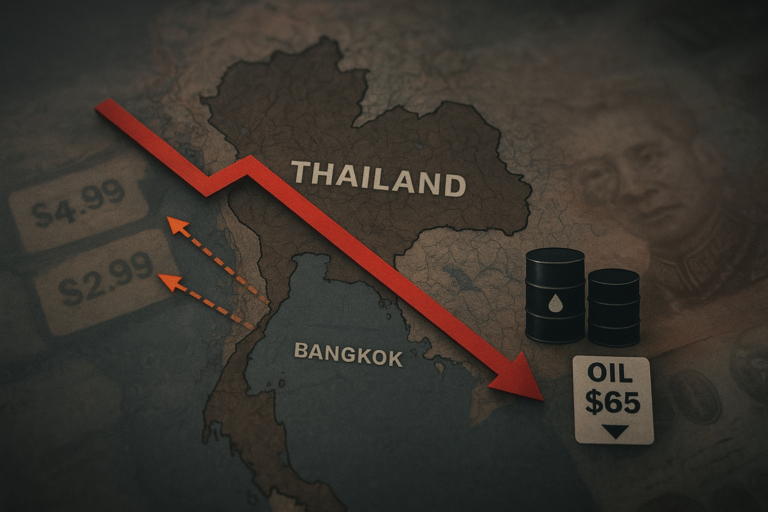
The key signal is the intensified vulnerability of Thailand’s energy security amid geopolitical tensions in the Middle East, specifically the ongoing Iran conflict, which has prompted a downward revision of Thailand’s GDP growth projections to around 1.3% and increased inflationary pressures. This development underscores the structural susceptibility of Thailand’s energy-import-dependent economy to external shocks, signaling a tighter macroeconomic environment that will directly weigh on corporate margins, consumer spending power, and fiscal stability.
Key Facts
- Thailand is a major net importer of oil and gas.
- GDP growth forecasts for Thailand have been revised downward, possibly to as low as 1.3%.
- There is heightened pressure on inflation, stemming from rising energy costs linked to geopolitical risks.
Why It Matters
Thailand’s heavy reliance on imported hydrocarbons makes its economy acutely sensitive to geopolitical disruptions that translate into supply volatility and price spikes. The Iran conflict exacerbates global energy insecurity, pushing crude oil and gas prices higher. For Thailand, where energy expenses constitute a significant portion of import bills and production costs, this generates a cascade of macroeconomic challenges.
First, the contraction in growth expectations to near 1.3% signals a material slowdown from prior forecasts, reflecting tighter household and business liquidity. Elevated energy costs increase production expenses and transportation costs, eroding corporate profitability, particularly in energy-intensive sectors like manufacturing and logistics. This can dampen private investment and hiring, slowing employment gains and consumer demand.
Second, inflation intensifies through cost-push mechanisms, reducing real income for Thai consumers and pressuring consumption—Thailand’s economic backbone. With food and transport prices linked to energy costs, overall price stability deteriorates, undermining purchasing power and raising expectations for tighter monetary conditions, which could elevate borrowing costs.
Third, the Thai baht may face depreciation pressure as rising inflation and growth uncertainty diminish capital inflows, including foreign direct investment and portfolio allocations. A weaker currency further inflates import bills, augmenting inflationary spirals, and complicates external debt servicing for corporates with foreign currency exposure.
From a fiscal perspective, government subsidies and social welfare programs may come under duress as energy prices rise, complicating budget management amidst slower growth. Any increased fiscal support to mitigate inflation effects could widen fiscal deficits, impacting Thailand’s sovereign credit profile and bond market dynamics.
Sector Impact
- Negative: Energy & Utilities – Import-dependent oil and gas sectors will face cost and supply chain disruptions, adversely affecting operational stability and margins.
- Negative: Manufacturing – Higher input and logistics costs reduce competitiveness and earnings, particularly for export-oriented segments sensitive to energy prices.
- Negative: Consumer Goods & Retail – Inflation pressures squeeze consumer disposable income, dampening demand and sales growth prospects.
- Neutral: Banking & Financial Services – While credit demand may slow amid economic weakness, underlying asset quality risks could rise due to corporate and household stress.
- Neutral: Tourism – No direct impact specified; however, inflation and currency weakness could influence tourist spending power indirectly.
ASEAN Context
This development appears primarily domestic in nature with limited immediate ASEAN-wide implications. However, Thailand’s economic performance and energy vulnerability could influence regional supply chains where Thai manufacturing is an integral component. Prolonged instability may weaken Thailand’s role as a regional production hub relative to ASEAN peers with more diversified energy sources or stronger fiscal buffers.
Bottom Line
The Iran conflict crystallizes Thailand’s precarious energy dependence and its material macroeconomic fallout—manifested in weaker growth and rising inflation. Investors should recognize that this heightens risk premia for Thai equities exposed to energy and consumer sectors and signals possible currency volatility. The immediate economic drag warrants caution in earnings forecasts and capital allocation, particularly for energy-intensive industries and consumer discretionary segments.
Thailand Investor Brief
Want deeper Thailand & ASEAN investor intelligence?
Join Thailand Investor Brief FREE
Unlock Thailand Investor Brief PRO
Complete Guide
For a broader investment framework, continue with the Thailand Tourism Investment Guide 2026.