Executive Summary
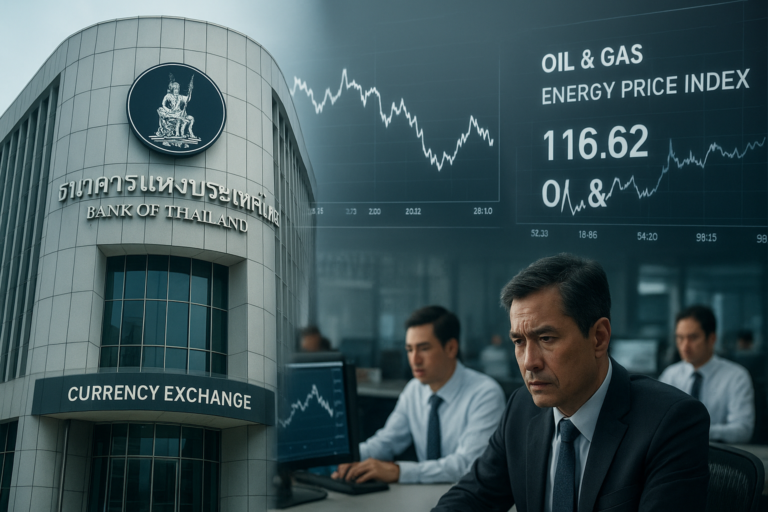
The key signal is heightened vulnerability of Thailand’s economic trajectory to global geopolitical tensions disrupting energy supply chains. The Iran conflict exacerbates energy import risks for Thailand, a major net importer of oil and gas, signaling a direct drag on growth and inflation dynamics. This development matters because it not only pressures GDP growth estimates down to 1.3% but also fuels inflation via cost-push channels, undermining consumer purchasing power and increasing operational costs across energy-reliant sectors. For investors, the immediate signal is a more volatile macroeconomic environment that could weigh on corporate earnings, burden fiscal balances, and stress debt servicing amid potential currency weakness.
Key Facts
- Thailand is a major net importer of oil and gas.
- Conflict in Iran has prompted a downward revision of Thailand’s GDP growth forecast to as low as 1.3%.
- Heightened inflationary pressures are expected as a consequence of the conflict.
Why It Matters
The disruption in energy supply dynamics from the Iran conflict directly affects Thailand’s import costs, given its reliance on imported oil and gas. Increased global energy prices transmit inflationary pressures into the Thai economy through higher transportation and production costs. This inflation compression threatens consumer spending, a crucial GDP component, and raises operational expenses for energy-intensive industries such as manufacturing and logistics.
For the Thai baht, increased energy import bills widen the current account deficit, putting downward pressure on currency stability. A depreciating baht would further inflate dollar-denominated import costs, creating a feedback loop that complicates monetary policy responses and raises foreign-currency debt servicing costs for corporates and the government.
Reduced GDP growth prospects reflect the confluence of cost shocks and weakened domestic demand amid inflation challenges. This signals risks to corporate earnings across sectors with high energy dependency and those exposed to consumer discretionary spending. It also raises risks for banking sector asset quality if higher inflation and economic slowdown impact credit repayment capacity.
Sector Impact
Positive:
- Energy Sector – Potential short-term upside for domestic oil and gas producers and renewable energy amid higher fossil fuel prices incentivizing alternative energy investment.
Neutral:
- Banking – Elevated inflation and growth risks may restrain aggressive lending but impact is likely measured given regulatory oversight; credit quality monitoring critical.
Risk:
- Manufacturing – Increased input costs from energy price escalation compress margins, especially in export-oriented sub-sectors sensitive to currency swings.
- Transportation & Logistics – Higher fuel costs reduce profitability and may lead to increased prices for goods and services.
- Consumer Goods & Retail – Inflation erodes real income, dampening consumption and affecting sales performance.
- Government Finances – Higher import bills and slowed growth pressure fiscal stability, complicating budget planning and public investment.
ASEAN Context
This development appears primarily domestic in nature with limited immediate ASEAN-wide implications. However, Thailand’s amplified energy import vulnerabilities and inflation pressures could impact regional supply chains due to its central role in ASEAN manufacturing and trade. Prolonged energy cost spikes may increase regional inflation pass-through and dampen intra-ASEAN trade momentum. Nonetheless, direct spillovers remain contained geographically.
Bottom Line
Thailand’s macroeconomic outlook is increasingly constrained by energy import dependence amid heightened geopolitical risks in the Iran region. Investors face an environment of slower growth and rising inflation that pressures earnings, currency, and fiscal balances. Exposure to energy-intensive sectors requires careful risk assessment as cost structures and consumer demand diverge. The primary takeaway is the persistence of external energy shocks as a key determinant for Thailand’s near-term economic stability and investor returns.
Thailand Investor Brief
Want deeper Thailand & ASEAN investor intelligence?
Join Thailand Investor Brief FREE
Unlock Thailand Investor Brief PRO
Complete Guide
For a broader investment framework, continue with the Thailand Energy Investment Guide 2026.