Executive Summary
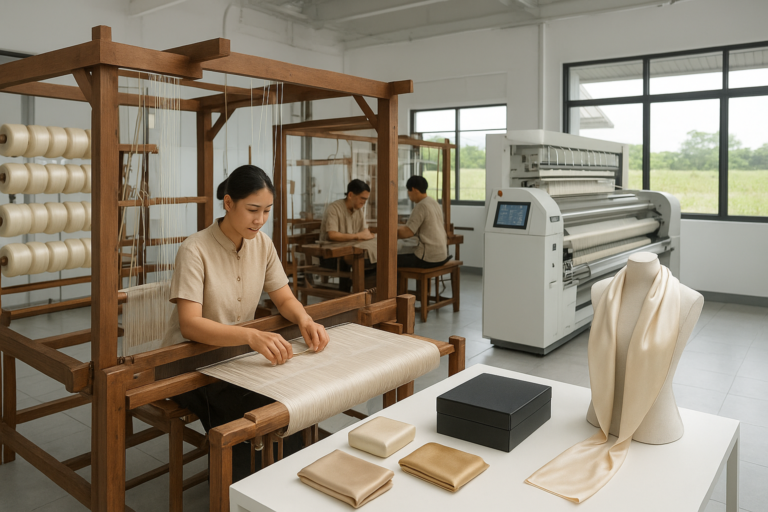
The key signal is Thailand’s strategic focus on reviving and upgrading its silk industry, which signals a broader economic pivot towards enhancing value-added traditional sectors amid global market uncertainties. This matters for investors as it indicates potential growth in niche luxury exports, supply chain diversification opportunities, and the enhancement of rural incomes, which can support consumption and social stability. Furthermore, the move underscores a thematic shift towards sustainable and culturally rich industries that blend heritage with modern branding and technology.
Key Facts
- Thailand is investing in the development and modernization of its silk industry, aiming to increase production efficiency and product quality.
- There is a focus on integrating contemporary design and technology with traditional silk craftsmanship.
- Government and private sector stakeholders are collaborating to boost both domestic demand and export potential.
- Efforts include enhancing the value chain, from raw silk production to finished textile goods.
Why It Matters
This development signals a deliberate strategy to capitalize on Thailand’s cultural assets to create sustainable economic value. For investors, the revitalization of the silk sector reflects opening avenues in specialty textiles with higher margins compared to commodity textiles, supported by branding aligned with luxury markets.
Thailand’s silk industry can attract new foreign direct investment by positioning as a unique product niche within ASEAN and global markets, diversifying Thailand’s export base beyond electronics, automotive parts, and agriculture. This diversification is economically important as it reduces dependence on volatile commodity cycles.
On a rural economic level, silk production predominantly involves smallholder farmers and artisan communities, so scaling the industry could enhance income stability and reduce rural poverty. This social dimension supports broader economic stability, which indirectly benefits consumer markets and business confidence.
The integration of technology and design innovation in silk production suggests a pathway for modernizing traditional sectors, signaling to investors that Thailand is pursuing sustainable, high-value-added manufacturing rather than competing on cost alone. This aligns with global consumer trends favoring authentic, ethical, and sustainable products.
Sector Impact
Positive:
- Textiles and Apparel: Enhanced product quality and branding improve export competitiveness and profit margins.
- Luxury Goods Segment: Growth potential in luxury silk products can attract investors targeting high-end consumer markets.
- Agriculture and Rural Enterprises: Increased demand for raw silk supports rural incomes and diversifies agricultural output.
Neutral:
- Manufacturing: Limited immediate impact since silk production is labor-intensive and small-scale, not capital-intensive manufacturing.
Risk:
- Export Dependency: Overreliance on niche luxury export markets exposes producers to global demand fluctuations and protectionism.
- Supply Chain Vulnerability: Upgrading production efficiency depends on technology adoption and skilled labor availability, which remain uncertain.
ASEAN Context
This development appears primarily domestic in nature with limited immediate ASEAN-wide implications. However, if successful, Thailand’s silk industry modernization could set a regional example for leveraging cultural heritage in economic development, potentially spurring similar initiatives in neighboring countries. Cross-border supply chain integration within ASEAN for raw materials, technology transfer, and joint branding frameworks could materialize longer-term but remains contingent on Thailand’s domestic success.
Bottom Line
The revitalization of Thailand’s silk industry signals a strategic effort to diversify exports and modernize traditional sectors through value addition and innovation. For investors, this indicates new growth avenues in niche textile markets linked to luxury and sustainability trends. The initiative strengthens rural economic structures, which supports broader consumption stability. Success in this sector would enhance Thailand’s export mix and demonstrate effective cultural asset monetization amid global economic uncertainties.
Thailand Investor Brief
Want deeper Thailand & ASEAN investor intelligence?
Join Thailand Investor Brief FREE
Unlock Thailand Investor Brief PRO
Complete Guide
For a broader investment framework, continue with the Thailand Policy Investment Guide 2026.