Executive Summary
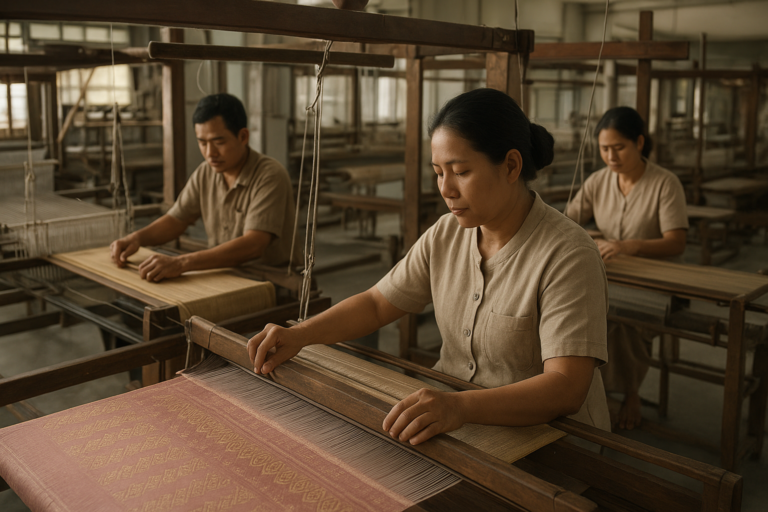
The key signal is increased investment focus on Thailand’s silk industry, reflecting a strategic push to capitalize on cultural heritage and niche luxury markets. This development signals an evolving landscape where traditional sectors are being leveraged for economic diversification and export enhancement. For investors, it underscores emerging opportunities in value-added manufacturing and artisanal exports within Thailand, contrasting with the country’s broader industrial framework dominated by electronics and automotive sectors.
Key Facts
- Investment initiatives aimed at expanding Thailand’s silk production capacity and improving product quality.
- Efforts to integrate modern techniques with traditional silk weaving to meet international luxury market standards.
- Collaboration between private investors and possibly local communities or government-backed programs (specific arrangements not detailed).
- Focus on branding Thai silk as a premium product to elevate export potential.
Why It Matters
Investing in the silk industry signals a strategic pivot to diversify Thailand’s export portfolio beyond conventional sectors. Given rising global demand for artisanal and heritage luxury goods, Thailand is positioning itself to capture higher-value export segments that command superior pricing and branding leverage. From an economic perspective, this can stimulate rural income, especially in regions with traditional textile crafts, supporting inclusive growth outside urban manufacturing hubs.
For investors, this development highlights new areas of productivity gains through modernization of supply chains, quality control, and international marketing. Elevated product standards can justify premium pricing, making this a potentially scalable model. However, investment in traditional sectors like silk requires navigating supply-side constraints such as skilled labor availability and maintaining cultural authenticity, which are critical for sustaining long-term brand equity.
The move towards artisanal export growth signals Thailand’s broader efforts to enhance Thailand’s value-add in global supply chains, supplementing existing industrial exports. It also reflects a government and private sector awareness that niche sectors can boost foreign exchange earnings and diversify income streams.
Sector Impact
Positive:
- Textiles and Apparel: Enhanced investment can raise skill levels, improve production technology, and increase competitive positioning in luxury fabrics, benefiting firms engaged in silk production and export.
- Rural Economies: Targeted investment provides employment and income diversification in weaving communities, promoting inclusive economic development.
Neutral:
- Manufacturing Equipment Suppliers: Moderate impact from demand for specialized weaving and quality control technologies.
- Retail Sector: Gradual impact depending on expansion of domestic and international luxury market penetration.
Risk:
- Raw Material Suppliers: Fluctuations in raw silk availability may constrain scale and raise input costs, requiring careful supply chain management.
- Brand Dilution Risks: Over-commercialization or quality lapses could undermine the premium positioning of Thai silk, affecting long-term export potential.
ASEAN Context
This development appears primarily domestic in nature with limited immediate ASEAN-wide implications. However, it positions Thailand as a distinctive source of culturally significant luxury textiles, enhancing its competitive standing versus regional neighbors in artisanal craftsmanship exports. It may encourage ASEAN supply chain specialization by embedding traditional textile sectors within higher value-added regional trade frameworks.
Bottom Line
Investment in Thailand’s silk industry highlights a deliberate shift towards value-added artisanal exports, presenting targeted opportunities for investors seeking exposure to niche luxury markets and rural economic development. This strategy could enhance Thailand’s export diversification by complementing dominant industrial sectors. Careful management of quality and supply constraints will be key to sustaining competitive advantages. Overall, the silk sector investment reflects evolving market dynamics with promising implications for selective investors focused on unique Thai cultural assets.
Thailand Investor Brief
Want deeper Thailand & ASEAN investor intelligence?
Join Thailand Investor Brief FREE
Unlock Thailand Investor Brief PRO
Complete Guide
For a broader investment framework, continue with the Thailand Policy Investment Guide 2026.