Executive Summary
The key signal is the tangible impact of global oil-derived naphtha supply risks on consumer goods packaging, signaling deeper macroeconomic pressures for oil-importing ASEAN countries like Thailand. Calbee’s shift to monochrome packaging exposes vulnerabilities in petrochemical supply chains driven by Middle East instability, potentially elevating input costs and inflationary pressures for Thai manufacturers and exporters reliant on similar feedstocks. This development matters because Thailand’s economy, heavily dependent on imported oil and naphtha-based raw materials, faces margin compression risks and supply bottlenecks that could influence corporate earnings, inflation trajectories, and trade competitiveness.
Key Facts
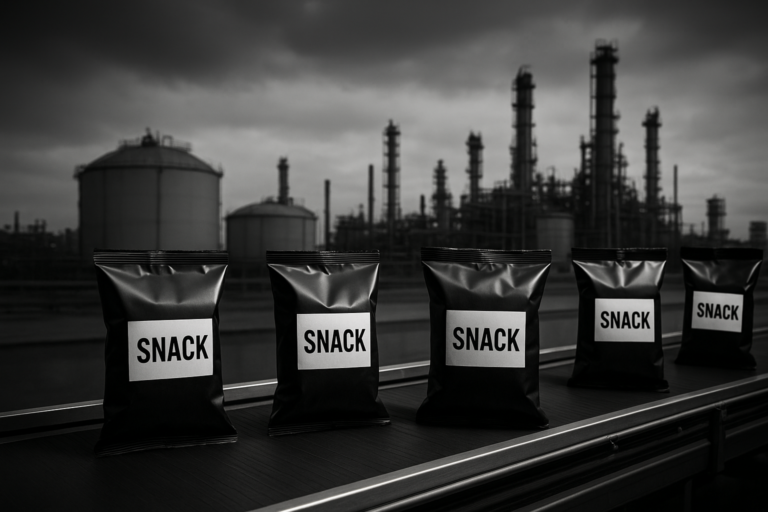
- Calbee, a major Japanese snack maker, rolled out black-and-white packaging for its Kappa Ebisen shrimp crackers in Tokyo.
- This packaging change responds to uncertainty over supplies of oil-derived naphtha caused by ongoing Middle East conflict.
- Naphtha is a crucial feedstock for packaging inks, adhesives, and other petrochemical inputs.
Why It Matters
Calbee’s packaging adjustment translates a raw material supply shock into operational and product-level adaptation, exemplifying how rising input costs and material scarcity seep through manufacturing and consumer sectors. For Thailand, this sends a direct warning signal: disruptions in naphtha supply linked to geopolitical tensions in the Middle East—one of the major sources of crude oil feeding into the global petrochemical chain—can compound existing inflationary pressures domestically.
Thailand imports a sizable volume of crude oil and naphtha, which feeds its petrochemical and manufacturing industries including packaging, plastics, and chemicals. A sustained squeeze on naphtha supply or price volatility will increase input costs for Thai manufacturers producing packaging materials, consumer goods, and export-oriented products reliant on petrochemicals.
This creates risk for listed Thai companies in consumer staples and manufacturing sectors, who may experience margin pressure due to costlier inputs and difficulty passing these onto price-sensitive domestic and regional consumers. Inflationary spillovers from elevated packaging and production costs could exacerbate core inflation, influencing the Bank of Thailand’s monetary policy and borrowing cost outlook.
Moreover, since packaging is integral across industries—from food and beverage to electronics—a prolonged naphtha supply challenge signals broader supply chain vulnerabilities. This can affect Thailand’s export competitiveness if cost structures rise relative to regional peers or if delays in packaging materials disrupt order fulfillments.
Finally, this development underscores Thailand’s macroeconomic sensitivity to oil price fluctuations and geopolitics, reiterating the importance of energy diversification and resilience for supporting stable economic growth and reducing external vulnerability.
Sector Impact
Positive:
- Petrochemical and Oil & Gas – Higher naphtha prices may support upstream margin gains for oil refining and petrochemical producers with integrated operations within Thailand.
Neutral:
- Packaging and Printing – While challenged by increased raw material costs, demand remains inelastic for essential consumer packaging.
Risk:
- Consumer Goods – Margin compression from rising packaging and input costs may pressure profitability for exporters and domestic brands.
- Manufacturing – Increased production costs and potential supply chain delays for plastics and adhesives impact competitiveness.
- Retail – Elevated consumer prices resulting from input cost inflation could dampen demand.
ASEAN Context
This development appears primarily domestic in nature with limited immediate ASEAN-wide implications. However, as Thailand shares reliance on imported Middle East oil derivatives including naphtha, regional supply disruptions could similarly affect manufacturing and export sectors in neighboring ASEAN countries like Malaysia, Indonesia, and Vietnam. Thailand’s position as a regional manufacturing hub means it may face pressures if supply shortages worsen relative to other ASEAN peers with better diversified sources. Regional petrochemical supply chains could experience increased volatility, influencing ASEAN’s broader industrial competitiveness.
Bottom Line
Calbee’s monochrome packaging rollout reveals how global oil market instability directly pressures supply chains and input costs, a risk materializing clearly for Thailand’s energy-importing, petrochemical-dependent economy. For investors, this underscores the importance of assessing corporate earnings vulnerability to input cost inflation, particularly within manufacturing and consumer sectors exposed to oil-derived raw materials. The episode highlights Thailand’s macroeconomic sensitivity to geopolitics and oil price swings, reinforcing the need to monitor supply chain resilience and energy import dynamics when evaluating market fundamentals.
Thailand Investor Brief
Want deeper Thailand & ASEAN investor intelligence?
Join Thailand Investor Brief FREE
Unlock Thailand Investor Brief PRO
Complete Guide
For a broader investment framework, continue with the Thailand Energy Investment Guide 2026.