Executive Summary
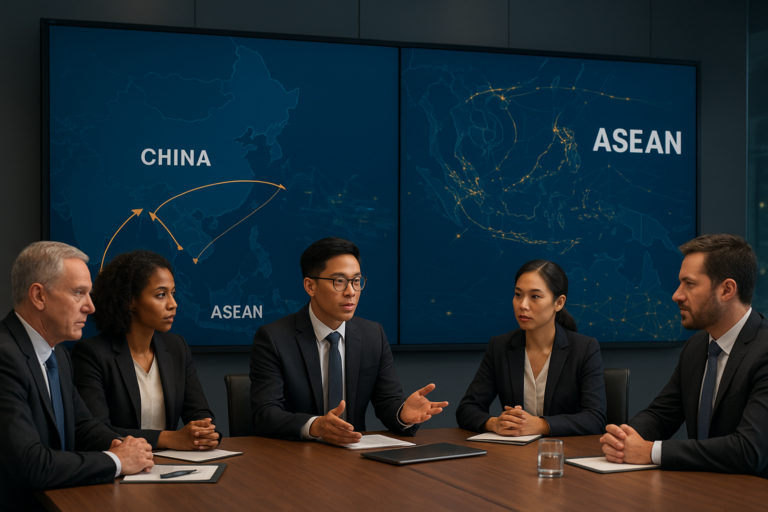
The key signal is the deepening of Thailand-China strategic cooperation, which signals increased economic integration and alignment within ASEAN’s regional dynamics. For investors, this development underscores elevated cross-border trade, investment flows, and infrastructure collaboration prospects centered on Thailand’s pivotal geographic and economic position. This partnership matters as it positions Thailand as a crucial conduit in China’s broader Belt and Road Initiative (BRI) ambitions and ASEAN connectivity, enhancing long-term commercial opportunities while inviting closer economic interdependence with China’s market fluctuations and policy shifts.
Key Facts
- Thailand and China have advanced their strategic partnership aimed at closer economic and infrastructure cooperation.
- The partnership focuses on economic integration, trade facilitation, and infrastructure connectivity projects.
- Thailand remains a core ASEAN country for China’s regional initiatives, including the Belt and Road Initiative.
- Details on specific policy implementations or reform measures remain unclear from currently available information.
Why It Matters
This development signals an intensification of Thailand’s role as a logistics and economic hub within ASEAN-China relations, which carries multiple implications. First, enhanced infrastructure and trade agreements can improve Thailand’s export and import efficiency, directly affecting businesses reliant on efficient supply chains and cross-border commerce. Increased Chinese investment inflows tied to infrastructure could lower costs and stimulate sectors exposed to logistics and transport.
Second, the strategic alignment may expose Thailand more directly to China’s economic cycles and regulatory environment, increasing Thailand’s sensitivity to Chinese policy shifts. For investors in Thai equities and bond markets, companies with substantial dealings with China may face heightened volatility risks and opportunities aligned with shifts in bilateral trade and investment patterns.
Third, this development influences regional supply chain evolution, potentially positioning Thailand as a key node in ASEAN-China value chains. This alignment benefits sectors oriented towards exports, manufacturing, and technology transfer but risks increased dependency on China, which could complicate Thailand’s trade diversification efforts.
Sector Impact
Positive:
- Infrastructure and logistics: Increased cooperation can accelerate projects, enhancing operational efficiency and business expansion in transport and warehousing sectors.
- Export-oriented manufacturing: Improved trade facilitation with China boosts capacity and market access for companies integrated into China-linked supply chains.
Neutral:
- Banking & Fintech: Chinese partnership might encourage financial linkages but no clear immediate policy or operational changes are indicated.
- Tourism: While economic alignment is beneficial, direct immediate impacts on visitor arrivals from China are unspecified.
Risk:
- Trade-exposed sectors dependent on diversified markets may face increased vulnerability from any China-specific economic or policy disruptions.
- Energy: Greater integration with China could expose Thailand to strategic shifts in Chinese energy procurement or pricing approaches, although no explicit energy agreements have been detailed.
ASEAN Context
This strategic partnership notably enhances Thailand’s intermediary role between China and ASEAN economies, facilitating ASEAN integration with China’s regional economic architecture. As China intensifies its regional focus, Thailand’s connectivity projects may serve as a blueprint or catalyst for similar ASEAN collaborations, reinforcing ASEAN’s economic cohesion with external powers.
However, the deeper Thailand-China nexus also accentuates geopolitical and economic balancing within ASEAN, where countries must navigate between global powers. Thailand’s closer alignment might influence ASEAN’s collective bargaining dynamics and external trade negotiations, increasing complexity in managing regional interests.
Bottom Line
Thailand’s strategic partnership with China signals a pivotal alignment that enhances Thailand’s infrastructural and commercial integration within ASEAN-China economic flows. This elevates business prospects for sectors tied to trade and logistics but simultaneously increases exposure to Chinese market and policy dynamics. The development underscores Thailand’s central regional role but also highlights the need for mitigating dependency risks amid evolving geopolitical landscapes. Investors should consider company-level exposure to China-linked activities when evaluating Thailand market opportunities.
Stay Ahead of Thailand and ASEAN Markets
Thailand Investor Brief delivers AI-powered investor intelligence covering Thailand’s economy, markets, policy developments, and ASEAN business trends.
Receive daily insights designed for investors, executives, entrepreneurs, and globally minded professionals.
Join thousands of readers following the signals that matter across Thailand and ASEAN.
Join Thailand Investor Brief FREE
Complete Guide
For a broader investment framework, continue with the Thailand Tourism Investment Guide 2026.