Executive Summary
The key signal is Thailand’s accelerated positioning in the liquefied natural gas (LNG) sector, highlighted by its emphasized role ahead of the 2026 Gastech conference. This development marks a strategic inflection in Thailand’s energy landscape, emphasizing enhanced LNG import capacity and infrastructure readiness. For investors, this signals a pivot toward securing energy supply diversity and mitigating exposure to volatile oil prices, potentially stabilizing energy costs and supporting industrial competitiveness in the medium term.
Key Facts
- Thailand is enhancing its LNG infrastructure and import potential ahead of Gastech 2026.
- Thailand aims to diversify its energy mix with increased LNG utilization, reducing reliance on conventional fuels.
- Gastech 2026 is positioning Thailand within a global LNG ecosystem focused on energy transition and supply security.
Why It Matters
LNG capability in Thailand represents a tangible shift in the country’s macroeconomic energy strategy, with critical implications for energy security. Enhancing LNG import and distribution infrastructure reduces vulnerability to oil price volatility, currently a major cost driver for Thailand’s energy import bill and industrial input costs. Among Thailand’s sectors, energy-intensive industries and exporters stand to benefit from more stable energy pricing facilitated by diversified LNG sources.
In macroeconomic terms, improved LNG access can attenuate external shocks transmitted through energy import bills, which affect the Thai baht’s stability and inflation dynamics. Stable or moderated energy prices may relieve inflationary pressures and reduce cost-push inflation, aiding Thailand’s broader economic stability and competitiveness.
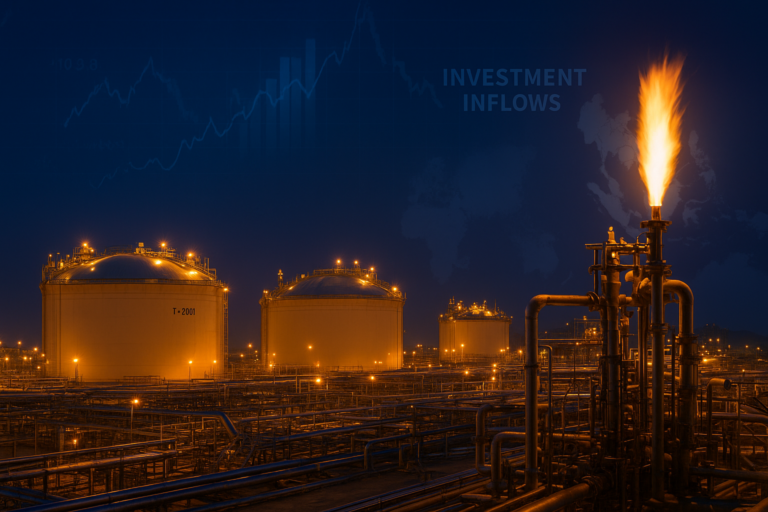
From a business perspective, the buildout of LNG infrastructure will demand significant investment in ports, regasification terminals, and logistics networks. This opens opportunities for capital inflows, both domestic and foreign, into energy infrastructure projects and ancillary services, fostering job creation and technological advancement. Investors in construction, utilities, and energy sectors will see evolving business models and project pipelines aligned with Thailand’s LNG agenda.
Participation in Gastech 2026 signals Thailand’s intent to integrate into global LNG supply chains and innovation forums, potentially attracting multinational energy players and enhancing knowledge transfer. It may also improve Thailand’s bargaining positioning in purchasing LNG at competitive terms, benefiting importers and downstream industries reliant on natural gas inputs.
However, there are risks linked to commodity price fluctuations, geopolitical tensions influencing LNG supply routes, and the implementation timeline of infrastructure projects meeting ambitious targets. Delays or cost overruns could strain public finances or corporate balance sheets if financing models rely heavily on borrowing.
Sector Impact
Positive:
- Energy Sector – Improved LNG infrastructure enhances energy supply diversification, reducing fuel cost volatility and strengthening Thailand’s energy security.
- Industry and Manufacturing – More stable and potentially lower-cost energy inputs can improve competitiveness in energy-intensive manufacturing and export-oriented sectors.
- Infrastructure and Construction – Increased demand for LNG terminals and associated logistics creates new investment opportunities and economic activity.
Neutral:
- Financial Sector – While financing demand for LNG infrastructure may rise, the sector’s exposure remains dependent on project execution and credit risk management.
- Domestic Gas Producers – LNG expansion complements but does not immediately disrupt existing conventional natural gas production.
Risk:
- Public Finances – Potential fiscal strain if government-backed guarantees or subsidies for LNG infrastructure escalate costs.
- Energy Importers – Exposure to LNG price volatility and supply disruptions remains a vulnerability despite diversification efforts.
ASEAN Context
This development positions Thailand as a growing LNG hub in the ASEAN region, potentially serving as a transshipment point or regional LNG supplier, enhancing Thailand’s geopolitical leverage and regional energy integration. Strengthened LNG infrastructure elevates Thailand’s role in regional supply chains, promoting ASEAN energy market connectivity.
Moreover, Thailand’s progress pre-Gastech 2026 may catalyze ASEAN-wide LNG infrastructure investment and cooperation, affecting regional energy security dynamics. This could spur cross-border partnerships and capital flows in LNG projects, although execution risks remain linked to regional geopolitical and market factors.
Bottom Line
Thailand’s enhanced LNG potential ahead of Gastech 2026 signals a strategic pivot toward diversified and more secure energy sourcing, mitigating macroeconomic vulnerabilities tied to oil price shocks. Investors should recognize this as a structural shift that improves energy cost stability and supports competitive industrial sectors. LNG infrastructure development will attract targeted capital flows, but execution and geopolitical risks must be monitored closely. The evolving LNG landscape also increases Thailand’s influence in ASEAN energy dynamics, creating new cross-border investment and trade opportunities.
Stay Ahead of Thailand and ASEAN Markets
Thailand Investor Brief delivers AI-powered investor intelligence covering Thailand’s economy, markets, policy developments, and ASEAN business trends.
Receive daily insights designed for investors, executives, entrepreneurs, and globally minded professionals.
Join thousands of readers following the signals that matter across Thailand and ASEAN.
Join Thailand Investor Brief FREE
Complete Guide
For a broader investment framework, continue with the Thailand Energy Investment Guide 2026.