Executive Summary
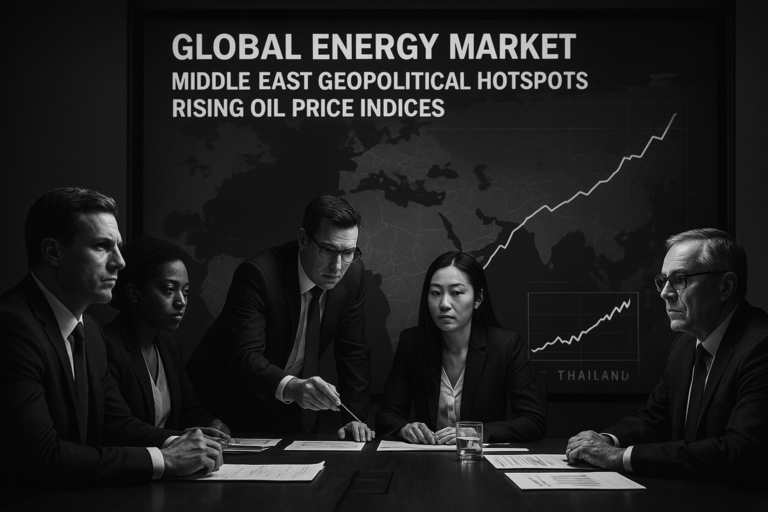
The key signal is that Thailand’s heavy reliance on imported oil and gas makes its macroeconomic stability vulnerable to geopolitical disruptions, such as the Iran conflict, with immediate economic consequences. This development matters because it signals increasing costs for energy imports, upward inflationary pressure, and a downward revision in GDP growth forecasts to as low as 1.3%. For investors and businesses, this environment translates into higher operational costs, squeezed profit margins, and constrained consumer demand, particularly affecting energy-intensive sectors and overall economic momentum.
Key Facts
- Thailand is a major net importer of oil and gas.
- The Iran conflict is causing increased risk and volatility in global energy markets.
- Thailand’s GDP growth forecast has been revised downward to as low as 1.3%.
- Inflationary pressures in Thailand are rising amid higher energy costs.
Why It Matters
The dependence on imported energy resources makes Thailand’s economy acutely sensitive to geopolitical disruptions in key supplier regions like the Middle East. Increased oil and gas prices feed directly into higher domestic energy bills, raising production costs across manufacturing, transportation, and service sectors. This not only compresses corporate margins but also passes through to consumers, elevating inflation and eroding real purchasing power in a market where household consumption remains a critical GDP driver.
The downward revision of GDP growth to 1.3% highlights a material slowdown, signaling a more cautious climate for investment and credit demand. Investors face challenges as earnings growth prospects dim, especially for sectors tightly linked to energy costs such as petrochemicals, logistics, and export-oriented manufacturing. Additionally, heightened inflation without commensurate nominal wage growth may suppress discretionary spending, affecting retail and hospitality sectors reliant on domestic consumption.
Thailand’s currency, the baht, is likely to experience volatility as investors reevaluate risk premia amid inflation and growth concerns. Pressure on the baht can increase the local-currency cost of dollar-denominated energy imports, compounding inflation risks and creating a feedback loop detrimental to investor sentiment and corporate planning.
From a fiscal perspective, government budgets may face constraints if revenues slow due to muted growth while subsidies or energy-related expenditures rise. This may limit the state’s fiscal flexibility to support economic stimulus or infrastructure investment, further dampening medium-term growth potential.
Sector Impact
Positive:
- Renewable Energy – Disruptions in traditional energy supply and rising prices boost the investment case for renewables as a medium-term hedge against import dependency and volatility.
Neutral:
- Banking – While slower GDP growth implies cautious credit demand, banks may face less pronounced impacts if inflation leads to higher nominal loan rates partially offsetting volume effects.
Risk:
- Energy-Intensive Manufacturing – Elevated energy costs reduce competitiveness and profitability, particularly for export-driven sectors exposed to global price cycles.
- Consumer Goods & Retail – Higher inflation squeezes disposable income, weighing on consumer spending and retail sector earnings.
- Transportation & Logistics – Rising fuel costs increase operational expenditures, pressuring margins especially for domestic freight and delivery services.
ASEAN Context
This development appears primarily domestic in nature with limited immediate ASEAN-wide implications. However, Thailand’s heightened energy vulnerabilities could accelerate regional cooperation on energy diversification and supply chain resilience. Increased energy cost pressures in Thailand may encourage ASEAN investors to recalibrate cross-border investment, particularly in energy infrastructure and alternative fuel ventures, while highlighting Thailand’s strategic role as a regional energy import hub.
Bottom Line
Thailand’s macroeconomic outlook is undermined by its import-dependent energy profile amid increased geopolitical tensions in the Middle East. Investors face a challenging environment characterized by sluggish GDP growth, rising inflation, and sector-specific cost pressures. Energy security risk elevates the case for greater focus on domestic energy alternatives and cost management. Ultimately, mitigating these risks remains essential for sustaining investor confidence and Thailand’s economic resilience.
Thailand Investor Brief
Want deeper Thailand & ASEAN investor intelligence?
Join Thailand Investor Brief FREE
Unlock Thailand Investor Brief PRO
Complete Guide
For a broader investment framework, continue with the Thailand Tourism Investment Guide 2026.